




















by Victor S. Sierpina, MD
Do you spend your days focusing on not being sick, or are you focused on wellness? The two are not one and the same, and whether you are focused on wellness, or not getting sick will make a big difference in your day-to-day life.
Wellness incorporates any and all of the following:
• Implementing a personal wellness plan
• A conscious commitment to excellence
• High self-esteem
• Integrated and balanced lifestyle
• Development of a supportive environment
• Personal responsibility to health
• Orientation to positive payoffs
A wellness life is dedicated to whole person excellence and is at the positive end of a spectrum that might start with low-level worseness, middle level mediocrity, or intermediate level tinkering with health.
You can live a wellness lifestyle even if you have a chronic illness and have perhaps made some less than optimal health choices in the past. These don’t matter as much as starting today with a consciousness focused on being well, being the best you can be, and accepting yourself with love and respect. This is far better than trying to live a life focused on merely avoiding disease, disability, and death.
So start today. Change your mindset to promoting good health rather than just not being sick. This involves trusting the ability of the body to heal itself, small but persistent changes in lifestyle, diet, movement and meditation.
Wellness will always require you to be honest with yourself in terms of feelings, regularly assessing your priorities, developing a wellness plan and maybe a wellness team to help you achieve it. This team can include a health coach, tai chi or yoga instructor, a dietician, physician, nurse, chiropractor, acupuncturist, massage therapist, exercise physiologist, sports psychologist or energy healer. You know what you need and who can help you get there with the resources of time, energy, and commitment you have now.
No matter where you are, you can start today. Remember this inspirational quote: “Your business is not to see what lies dimly at a distance, but to do what lies clearly at hand.”
You know what you can do to start on your path to high-level wellness. So what are you doing now? Take a step, any step, and see what happens next.

Weight loss surgery is a good option for those who are significantly overweight or obese, but it isn’t a quick fix, and many patients find it difficult to keep the weight off in the years after bariatric surgery. According to the American Society for Metabolic and Bariatric Surgery, upwards of 50 percent of patients regain five percent of their body weight within two years after undergoing a weight loss procedure.
Patients who want to see the weight lost stay off will need to develop strategies to help them avoid rebound gains down the road.
“Many people think bariatric surgery itself is a diet that enables them to eat whatever they want, when they want,” explains Dr. Nick Nicholson, founder and lead surgeon at Nicholson Clinic. “That is a complete fallacy. Weight loss surgery enables diets to be more effective, but patients must do their part to see the results they desire and maintain the losses down the road.”
If you have had weight loss surgery, here are some tips to help you keep the weight off for years to come.
Get support for long-term success. Setting up a support network is key to your success. Family and friends can help encourage you and hold you accountable, and attending a formal post-surgical support group, can help answer questions and guide you as you strive to make healthy choices months and years after surgery.
Assemble a medical team. Post-surgical follow-ups with medical professionals should likely continue for quite a while after surgery. Your weight loss surgeon, clinical staff, a therapist specializing in emotional eating, a fitness expert and a nutritionist can prove valuable members to have on your weight loss team.
Learn to think differently about food. The relationship with food is often a complicated one. When food dependencies or abuse are the root cause of obesity, getting help to address the root problem is a must, as is learning to develop healthier eating habits overall. Addressing issues may take time, but once good habits are developed they can prove as difficult to break as bad ones and can help prevent weight regain.
Create new habits. Immediately following weight loss surgery, most patients lose weight very rapidly. With time, weight loss will begin to slow and it can become easy to return to old habits. Develop new eating habits early on, including focusing on nutrient-dense food and lean protein. Eating low-calorie, filling foods like vegetables can help you avoid weight gain but keep satisfied when your appetite returns.
Get active. Take advantage of your new, slimmer physique and greater energy levels and develop strong exercise habits. You should be physically active most days of the week (at least five days a week). The American Heart Association recommends adults get 150 minutes of moderate-intensity exercise each week, or 75 minutes of high-intensity exercise weekly. Regular exercise can make a big difference in preventing weight gain after bariatric surgery.
“Weight loss is a journey that doesn’t end with surgery,” says Dr. Nicholson. ”Avoiding rebound gains months and years down the road takes dedication, support and a desire to develop and stick with a post-surgical plan.”
Most importantly, remember that we all face setbacks. Don’t let a little slipup throw you off course. If you have a bad day, week or month, get up, dust yourself off, and get back on track.

Easter is just a few days away! Do you have a plan to keep from overeating and avoid filling up on unhealthy foods?
Like any holiday, Easter is about so much more than the food on your table. What’s most important are the people with whom you celebrate. But, we understand, Easter dinner is a tradition and is one of the few days of the year that you and your family prepare a real feast.
So how do you enjoy Easter without overdoing it? Plan a menu full of healthy choices. Here are some of our favorite healthy and delicious foods to serve on Easter. Remember to limit yourself to appropriate portions, and avoid spending the day “grazing.”
Need a little help planning your Easter menu? Here are a few suggestions from Nicholson Clinic.
Shrimp Deviled Eggs
Ingredients
6 large eggs
3 tablespoons Hellmann’s mayonnaise
3 tablespoons Fage Greek yogurt
1 teaspoon Dijon mustard
Old Bay seasoning
¼ pound cooked shrimp very finely chopped
3 scallions, finely minced, including tender green tops
1 teaspoon chopped fresh dill – if you are not using fresh, do not use dried
Preparation:
Place eggs in a covered pan just large enough for a single layer. Add room temperature water to cover the eggs by about one inch. Place pot on high heat and when the water just begins to boil, cook for 1 minute. Turn off the heat, cover the pot, remove from burner and set timer for 15 minutes. Drain the eggs, fill the pot with cold water to cool the eggs before peeling.
Split eggs lengthwise and remove yolks to a medium bowl. Mash yolks with fork until fine textured and fluffy. Blend with mayonnaise, yogurt, mustard, ¼ teaspoon Old Bay, shrimp, scallions and dill. Scoop filling into white halves. Lightly sprinkle with additional Old Bay and garnish with fresh dill. Cover and chill until serving
Sunshine Broccoli Bacon Salad
Ingredients:
6 slices uncured turkey bacon, cut into 1/2-inch pieces
1/2 cup reduced fat mayonnaise
3 Tbsp. orange marmalade
2 Tbsp. distilled white vinegar
6 cups fresh broccoli florets
1/4 cup sliced red grapes
1/2 cup chopped red onions
Slivered almonds to garnish
Preparation:
Cook bacon in a nonstick skillet on medium heat until done. Mix mayo, marmalade and vinegar until blended. Combine bacon with remaining ingredients in a large bowl. Add mayo mixture and mix lightly. Refrigerate one hour before serving. Garnish with slivered almonds.
High Protein Mashed Cauliflower
Ingredients:
Raw cauliflower (medium head or one pound of florets)
1/4 cup of any combination of butter, low-fat milk, low-fat cream, or whatever you use when you make mashed potatoes
Salt and pepper to taste
1 cup of peeled and cooked potatoes
1 teaspoon garlic powder
1 tablespoon of grated cheese
2 scoops of Unflavored Whey-Licious Protein Powder
Preparation:
Break the cauliflower up into florets, or just chop and steam it until it’s tender and place in a large bowl.
Add all other ingredients including protein to the bowl and then use a hand blender to mix until desired texture. Or, you can put it all in a regular blender or food processor. Enjoy!
Balsamic-Maple Glazed Ham
Ingredients:
1/4 cup balsamic vinaigrette dressing
1/4 cup sugar-free maple syrup
1 Tbsp. Dijon mustard
1 bone-in skinless smoked ham, shank or butt end portion (7lb.)
2 lb. parsnips, trimmed, peeled and cut into 1/2-inch-wide spears
1-1/2 lb. baby carrots
3 Tbsp. olive oil
Preparation:
Heat oven to 325° F. Mix dressing, syrup and mustard. Place ham fat-side up, in roasting pan. Diagonally score ham and cover with foil. Bake one hour. Remove foil, brush ham with 1/3 of the glaze. Bake uncovered one hour, or until heated to 140° F, brushing with remaining glaze every 20 minutes.
Toss parsnips and carrots with oil in a large, shallow pan. Add to oven with ham the last 45 min of baking time, turning veggies every time ham is brushed with glaze. Remove ham from oven; transfer to cutting board. Tent ham with foil; let stand 15 min. Continue roasting vegetables 15 minutes, turning every five minutes. Slice ham and serve with roasted veggies.
Fresh Fruit Kebabs with Lemon Lime Dip
Ingredients:
4 ounces low‐fat, sugar free lemon yogurt
1 tsp fresh lime juice
1 tsp lime zest
4‐6 pineapple chunks
4‐6 strawberries
1 kiwi, peeled and diced into large chunks
1/2 banana, cut into 1/2-inch chunks
4‐6 red grapes
4 wooden skewers
Preparation:
In a small bowl, whisk together yogurt, lime juice and lime zest. Cover and refrigerate until needed. Thread 1 of each fruit onto skewer. Repeat with other skewers until fruit is gone. Serve with lemon lime dip.

By Marilyn Hoyt C.P.T N.A.S.M, C.E.C
Weight loss surgery is only the start of your weight loss journey. Losing weight and keeping it off requires a balance of nutrition and exercise.
Immediately following bariatric surgery, you will be limited in what you can do physically, giving your body time to heal. Many patients are excited to start working out after surgery, while others may face some anxiety about post-weight loss surgery exercise.
As you prepare to begin physical activity after bariatric surgery, here are some tips to help you stay motivated and keep you safe:
Talk to your doctor. First and foremost, be sure your doctor has cleared you for exercise. It’s important to be sure your body has healed and is ready for physical activity. Most patients should be able to begin a more intense exercise routine six weeks after surgery.
Take it slow. Allow yourself to ease into a regular fitness routine. You aren’t going to go run a marathon in the days following your surgery, but it is important to begin walking at least 20 minutes a day immediately after surgery. If needed, break it up with 10 minutes in the morning and 10 minutes later in the day. Start by walking on a flat surface and gradually increase difficulty by incorporating hills into your walk and take your speed up a notch or two.
Have fun. Find an exercise you will enjoy. If you don’t have some fun exercising, you will be less likely to keep up with a regular workout routine. The best exercise program for bariatric surgery patients includes a balance of endurance (walking, biking, swimming), flexibility (stretching and yoga) and strength training.
Get the gear. You’re on your way to a whole new you, so invest in the right gear you need to exercise, including breathable clothing and a good pair of shoes. To find athletic shoes that are the best fit for your foot, go to Luke’s Locker, or another specialty running/shoe store to be fitted by experts who will watch you walk and determine which shoes are best fit for you. A fitness tracker, such as a Fitbit can also be a great tool to keep track of your physical activity, heart rate, calories burned and even what you eat.
Change it up. Variety is key. If you do the same thing day after day, you will quickly get bored and lose your motivation. Rather than doing the same exercise routine every day, change things up to keep things interesting. For example: On Monday, go for a fast walk, on Tuesday, hit up the weights; on Wednesday, attend a group exercise class; on Thursday, go for a swim; on Friday, try some yoga. Variety in your workouts will also prevent your body from adapting to one form of exercise so you’ll keep burning lots of calories and avoid a plateau in your weight loss.
Focus on building strength. Strength training such as body weight exercises and lifting weights are some of the best exercises you can do to burn fat. In most cases, strength training is not recommended until you are at least three months post-op, so be sure to consult with your doctor before beginning strength training. To prevent injury while strength training, consider working with a professional fitness trainer who can teach you proper form.
Set clear goals. What is your end goal? What benchmarks will you set for yourself along the way? It’s important to have clear, realistic, measurable goals when you are trying to lose weight. To stay motivated along the way, take time to celebrate your small milestones. And on the days you fall off the wagon, don’t beat yourself up. Instead, just set your mind to get back with it tomorrow.
Losing weight and keeping it off is the result of determination, dedication, and hard work. There is no easy way to lose weight, and healthy weight loss must include proper nutrition and regular exercise.

Marilyn Hoyt is a Dallas-based Certified Professional Trainer. She holds group workout sessions, including groups specifically designed for people who are significantly overweight, intermediate and advanced fitness camps, and provides in-home personal training.
“Aiming to educate, motivate, and inspire others to live life with purpose!”
Visit Marilyn online at: www.rockfitnesscamp.com.
Follow Marilyn on Instagram: @rockfitnesscamp
Like Marilyn on Facebook: FitnessWithPurpose

Stress is killing you. According to the American Institute of Stress, 60 percent of all human illness and disease can be attributed to stress. Three in four doctors visits are for stress-related ailments.
Stress is also a factor in the obesity epidemic — 40 percent of people who are stressed overeat or eat unhealthy foods. Stress can shorten your life by making you more susceptible to heart disease, heart attack and stroke.
Treating the stress in your life is vital to maintain a healthy heart and live a long life.
Meditation is one way you can reduce stress and improve your health. It is an evidence-based treatment for stress that does not require seeing a doctor or taking medications. Managing stress reduces the negative effects of adrenal hormones that are stimulated by stress. Meditation can work to turn down these stress hormones.
Some people may be turned off to the idea of meditation due to its spiritual connotations, but meditation itself is simply a practice of slowed, mindful breathing. Recent research shows that taking deep diaphragmatic breaths and slowing your breathing to 5-7 breaths a minute compared to the average of 12-18 breaths affects an important nerve, the vagus nerve, which controls heart rate, gut function, mental patterns, mood, asthma and more.
Learning stress-reduction techniques like meditation can help preserve your health, and maybe even save your life.

If you are working out regularly, good for you! Exercise is essential not only for weight loss, but for a healthy heart, strong bones and even mental health. But getting caught in too much of a routine can become boring and cause you to hit a weight loss plateau.
Are you stuck in a fitness rut? Here are a few signs it might be time to overhaul your exercise routine.
You spend most of your time on cardio machines.
Yes, a cardio workout burns calories, but you’re missing out if you don’t have a good balance of cardio, strength training, flexibility and core workouts. If you want to maximize your results and really see changes, ditch the cardio machines and mix things up with resistance training. Research shows that a shorter workout with more variety and intensity is more beneficial that spending an hour running or walking on the treadmill. (Not to mention, the scenery isn’t very inspiring.) Get off the machine and do a 15 or 20-minute bodyweight circuit. Think squats, lunges, burpees, wall sits, pushups, jumping jacks, etc.
You’re focused on the clock.
You know you’re bored with your workouts if you spend the time checking the clock after every exercise, rather than getting into the flow of a good workout. If you find yourself easily distracted or looking for excuses to cut your workout short, it’s time to shake things up and try something new.
Step out of your box and try a workout you’ve never done before. Join a recreational sports team or check out a group exercise class at your gym like Zumba, spin, kickboxing or yoga. There really are endless choices when it comes to exercise, and no requirement saying the only way to get a good workout is to go to the gym. Any type of physical activity that gets your heart rate up and challenges your body is an excellent choice.
You’ve stopped making progress.
Has the scale stopped moving? Are you struggling to shave time off your mile run, or can’t seem to hit your target weight? First, it’s important to be sure you’ve set a realistic goal. Consult with a certified professional trainer to help you assess your goals and give you honest feedback. A trainer can also help you develop a structured workout plan to work toward your goals.
Remember, exercise can — and should — be fun! Don’t be afraid to mix things up and try something new. Each day during your workout, focus on something different: cardio, upper body strength, lower body strength, core, etc. Keeping variety in your workout is the best way to maintain your motivation and melt away those extra pounds.

Are you struggling with the “winter blues”? Experiencing some symptoms of depression during the winter months isn’t uncommon. In fact, studies show that as many as 40 percent of patients seen in primary care settings experience some degree of depressive symptoms during the winter months.
While most of the time, these emotions are benign, occasionally they can grow into a collection of symptoms consistent with seasonal affective disorder (SAD). SAD is a more serious concern and is, in fact, classified by the American Psychiatric Association as a recurrent type of major depressive disorder.
Typical symptoms of SAD include increased sleep, increased appetite, weight gain, and irritability that occur annually in late fall to early winter — with complete resolution of symptoms in the spring and summer months.
While the exact mechanism is unknown, most research points to a lack of exposure to daylight as a cause. As such, treatment revolves around light therapy—making time to get outside improves mood and decreases doctor visits. Commercially available lamps that produce 10,000 lux (a measurement of light) have also been shown to reverse symptoms of SAD. Large studies have shown drastic improvement in mood when these lamps are integrated into a daily routine for only 30 minutes.
For severe symptoms, practitioners can consider using antidepressant medication (Prozac, Wellbutrin), or even cognitive behavioral therapy (CBT) to help patients restructure thinking patterns and challenge negative thoughts.
Talk with your primary care doctor if you think that you are struggling with SAD. They can help you experience the beauty that is winter — it should be something that we look forward to, not a season we dread.
By Sheri Sellars, RN, Nurse Educator

Weight loss surgery means a change in your lifestyle, including your diet. Once your doctor has cleared you to start eating solid foods, you’ll have some changes to make in the kinds of foods you eat to help keep you on track on your weight loss journey.
The best foods to eat following weight loss surgery are high in protein and low in fat and sugar. The Nicholson Clinic is devoted to helping our patients develop a healthy lifestyle post surgery.
Egg Salad with Yogurt and Dill
Makes: 4-6 servings
Ingredients:
8 large eggs, boiled and peeled
1/3 cup low-fat Greek yogurt
1 tablespoon mayonnaise
1 tablespoon minced fresh dill (may substitute 1 teaspoon dried dill)
3/4 teaspoon kosher salt
1/2 teaspoon freshly ground black pepper
Directions:
Cut each egg in half and place in food processor bowl. Pulse 10-12 times until eggs are broken up into small pieces, being careful not to overdo it and puree the eggs. (Or, chop the eggs with a knife.) In a separate large bowl, use a fork to whisk together the yogurt, mayonnaise, dill, salt, and pepper. Add the chopped eggs and mix lightly with the fork until well combined.
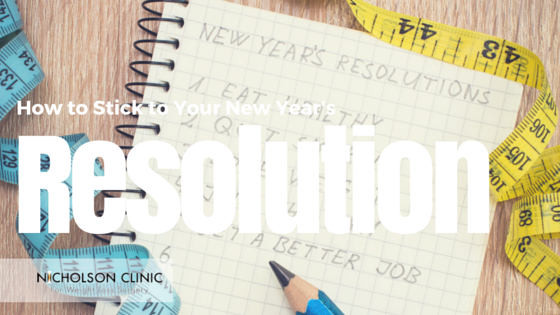
Each year, 45 percent of Americans make New Year’s Resolutions. Most of us will break our resolutions by the end of January, and only about eight percent of people will actually reach their goal at the end of 2016.
Why is it so hard to stick to our New Year’s Resolutions? It’s often because we fail to make resolutions that are practical and measurable. Without the right strategy and support, keeping your resolution through the end of the year will be tough.
If you’ve made a resolution to be more active, get fit, and live healthier this year, here are ten tips to help you carry your resolution out through the end of the year and turn it into a lifestyle change to live a stronger, healthier you in 2016.
Stick to one resolution. Don’t over-complicate things. Make just one clear, concise resolution you can focus on for the year and you’ll increase your chances of success.
Be specific. Making vague goals is a common mistake people make. Set a specific, measurable goal, such as “I want to lose 20 pounds by August.”
Make a resolution you can do anywhere. Just because you want to get fit in 2016 doesn’t mean you have to go to a gym or own expensive fitness equipment to workout. You can do bodyweight exercises in your home, hotel room, or virtually anywhere, and these don’t require any fitness equipment. If you want to add an extra challenge, invest in a set of lightweight (5-10lb) dumbbells or kettlebells.
Establish a routine. On average, it takes 21 days to create a habit. Planning out a daily routine will help you stay on track and get into the habit of exercising regularly.
Make a schedule. Take some time to think through your schedule and choose a time for your workouts that you can keep consistent day-to-day and week-to-week. If you plan to workout in the mornings (recommended because you’ll have more energy to get through the day), you must also plan to go to bed earlier the night before.
Focus on one small change at a time. Big goals are overwhelming, but try breaking your resolution down into smaller goals or changes you can make over time to help you accomplish your one big goal.
Find a workout buddy. Having a friend to workout with you will give you the accountability you need to keep going. If you plan to meet up for a workout at a set time, you’re less likely to back out if you know someone is counting on you to be there. Choose a friend who has similar goals as you and isn’t too far ahead of you on his or her own fitness journey.
Track your progress. The best resolution is measurable. Use a calendar, journal, or app to track your progress and evaluate your accomplishments throughout the year.
Visualize the end result. Keep your eyes on the prize and visualize the end result. When you feel discouraged or lack motivation, remind yourself why you made this resolution in the first place.
Celebrate the milestones. It’s easy to become discouraged at some point on your journey. Ward of discouragement and take time to appreciate the progress you make along the way. While your goal for the year may be to lose a certain amount of weight, take time to celebrate the small milestones along the way. Track your weight loss at the end of each week and be proud of your accomplishment in moving toward your goal.

“Don’t be afraid of change, because it is leading you to a new beginning.”
– Joyce Meyer
It’s a new year, a new day. Every new moment provides the chance for a new beginning. Will you embrace change in 2016?
Starting anew means letting go, shaking things up, and not being afraid to do something different. This New Year is a chance to build and invest in the you that you want to be moving forward.
Take some time to reflect on last year — your successes and failures. What worked for you? What didn’t? Learn from your mistakes and set your sight forward. This year, you will become the best version of yourself.
Maybe that means more loving, thinner, less stressed, more successful in work, or better in relationships.
Whatever your resolution, it is easy to say, hard to start, and even more difficult to complete. But success comes to those who commit to their dreams day by day, moment by moment.
Accept yourself as you are. Forgive yourself when you stumble. Get up, and go on. Tomorrow is a new day, a new beginning.