















Outdoor exercise offers many benefits, such as improving mental health and increasing production of vitamin D for better overall health. But the summer heat can make outdoor exercise dangerous if proper precautions aren’t taken. (Read more about the benefits of outdoor exercise here.)
The most important thing you can do when spending time outside is to be sure you are drinking enough water. Hydration is critical to your overall health. Every cell, tissue and organ in your body depends on water to survive. When the body’s water sources are depleted (when you become dehydrated), body functions begin to shut down.
Combined with extreme heat, dehydration, can quickly lead to dangerous heat exhaustion, and even potentially fatal heat stroke. Every year, hundreds of people die from heat-related health conditions. Every year, hundreds of people die from heat-related health conditions. Keeping hydrated is the best way you can avoid heat exhaustion and heat stroke.
Know the Symptoms of Dehydration
There are many warning signs that you may be dehydrated, including:
• Dark urine, or little or no urine
• Dry mouth
• Fatigue
• Extreme thirst
• Headache
• Anxiety or confusion
• Dizziness or light-headedness
• Lack of tears
If you notice these symptoms, there is a good chance you are already dehydrated. The best way to avoid dehydration is to drink water regularly, not just when you feel thirsty or experience other symptoms. Here are some tips to help you stay hydrated:
Drink lots of water. Adults should drink at least six to eight 8-ounce glasses of water per day, but if you are exercising outdoors, you may need more. A good rule of thumb is to drink at least half your body weight in ounces of water. (If you weigh 200lbs, try to drink 100oz of water each day.)
Avoid dehydrating beverages. Caffeinated and alcoholic drinks are dehydrating. If you feel thirsty, drink water instead of dehydrating beverages. If, every time you take a drink of water, you take at least 10 big gulps, you are less likely to become dehydrated. Fruit and vegetable juices, milk, broths and herbal teas and hydrating foods like watermelon and cucumber can help you stay hydrated, but water should be your main source of fluid.
Drink before and after your workout. Fill up on water before you begin your workout and again after you finish. Drink as needed during your workout. To be sure you are drinking enough water to replenish what is lost during your workout, weight yourself before and after your workout and drink the amount of weight lost.
Know the Symptoms of Heat Exhaustion
The first stage of heat stroke is heat exhaustion. It is the result of being dehydrated. Perspiration is your body’s natural reaction to heat. It is how your body keeps itself cool. When you sweat, those fluids lost must be replenished. If they are not, you can become dehydrated and may experience heat exhaustion.
Here are some warning signs of heat exhaustion:
• Thirst
• Nausea and/or vomiting
• Pale, moist skin
• Excessive sweating
• Rapid breathing
• Weakness or fatigue
• Muscle cramps
• Light-headedness
• Headache
If you begin to experience these symptoms, drink water or sports drinks with electrolytes to help improve symptoms and prevent your condition from progressing to heat stroke. If your heat exhaustion progresses to heat stroke and it is not treated quickly, the symptoms can be fatal. If you or someone near you begins experiencing any of these symptoms, seek immediate emergency medical attention:
• Fever
• Dry, hot, red skin
• No sweating
• Confusion
• Fainting
• Rapid, shallow breathing
• Rapid, weak pulse
• Seizures
In addition to staying hydrated, here are some tips to help keep you safe this summer.
Keep Cool. Plan your outdoor exercise and activities in the early morning or evening hours. When possible, avoid being outside for long periods of time during 10am and 4pm, when the heat from the sun is strongest. Keep cool in an air-conditioned place.
Don’t exercise alone. Find a buddy to workout with you. Exercising in pairs or groups is always the safest option, especially during the summer heat. If you or your workout partner begins to experience symptoms of dehydration or heat exhaustion, get inside, cool down and re-hydrate. Seek medical attention of symptoms do not improve.
Don’t let the summer heat keep you from staying active. Be smart about when and how you choose to exercise. Stay hydrated and know the signs of serious health problems like heat exhaustion and heat stroke.

The decision to undergo weight loss surgery is only the first step in a lifelong journey. Bariatric surgery is not a “quick fix,” or a “magic bullet,” but the beginning of a lifestyle overhaul. For patients to gain the results they’re after, follow-up care is a must in the days, weeks and even years after a weight loss procedure is performed.
Lasting success equals a lifelong commitment to weight loss.
While follow-up appointments immediately following bariatric surgery will be to ensure a patient’s health and lack of any complications, as time goes on, the focus of these appointments will ultimately turn toward long-term weight loss support. This piece of the puzzle is just as important as going in for routine post-operative exams shortly after a weight loss procedure is performed.
“Bariatric surgery is one part of a successful weight loss plan,” explains Dr. Nicholson. “After surgery, patients will find they require continued care and support to ensure proper diet is incorporated and that exercise also becomes part of their routines. Support for making, and sticking with these lifestyle changes, can be as crucial as surgery itself for successful weight loss.”
Patients who are considering bariatric surgery to address obesity will find that counseling is a part of the routine before surgery. To ensure long-term patient health and success, nutritional and lifestyle counseling may continue well after the procedure is performed.
“It’s important for surgical patients to understand they do not walk alone in their journeys,” says Dr. Nicholson. “This is precisely why after-care support is made available and is strongly encouraged for all bariatric surgery patients.”
In addition to routine follow-up appointments with our physicians and staff, Nicholson Clinic patients also have access to weight loss surgery nutrition classes, monthly support group meetings with Dr. Jay Ashmore, Clinical Director of the Baylor Behavioral Health Center, fitness programs and a private Facebook support group where patients can connect with other Nicholson Clinic patients.
To learn more about the Nicholson Clinic and the weight loss support services we provide, click here.

Do you need a challenge this summer — a goal to work toward? Nicholson Clinic invites you to join our team at the Heart of Gold 5K and Fun Run on September 24 in Richardson. This race benefits Heroes for Children, a charity close to the Nicholson family.
Make it a day for your whole family. The event features a Kid’s Adventure Zone, food, drinks and entertainment for children and adults.
The Plaza at Galatyn Park, Richardson, TX
Saturday, September 24
Opening Ceremonies at 7:30am
Registration is $25 for adults, $15 for children 14 and under.
Ready to join the Nicholson Clinic Team? Here’s how to sign up:
- Follow this link.
- Scroll down to “Adult Registration“ and select “Register“.
Select “Join a Team,” then choose “Nicholson Clinic Heroes” from the drop down menu.
Train with Nicholson Clinic
Never participated in a 5K before? Nicholson Clinic’s fitness expert, Marilyn Hoyt C.P.T. has put together a 12-week 5K training plan just for you. Click here to get started training!
Follow us on Facebook and Twitter to learn about opportunities to train with Nicholson Clinic doctors.
Free Group Run/Walk
Don’t want to train alone? Join the free group run/walk led by Endurance House fitness expert, Lance Thomas. Set your own pace and let’s do this together!
Tuesdays, 6:00PM
Starting July 6 – Sept. 21
(12 weeks leading up to the 5K)
Meet at Endurance House in Plano
About Heroes for Children
Based in Richardson, Texas, Heroes for Children advocates for and provides financial and social assistance to families with children battling cancer. Since 2004, Heroes for Children has provided $5.5 million to more than 4,500 families in need through the organization’s financial and social assistance programs.
By Marilyn Hoyt C.P.T N.A.S.M, C.E.C
So you want to run a 5K? Before you hit the ground running, you need to invest in a good pair of running shoes. Visit Luke’s Locker, RunOn or another specialty shoe store to get fitted for the right shoe made for how your food strikes the ground.
Below is a 12-week training plan for beginners. If this schedule doesn’t work for you, make adjustments as needed. The first eight weeks, you will start with walking. When you feel you are ready, add in a light jog. Make sure you are still able to carry a conversation which will indicate that your heart rate is still at a good rate.
Be prepared to feel a little sore! If at anytime you feel more than sore and you feel pain back off from running till you are healed up and see a doctor if needed. Just remember there is a difference in soreness and injury. If you have to take a break due to life circumstances don’t give up. Just continue where you left off. The focus of the last four weeks is distance. You will be able to run most of the time since your endurance is stronger.
If you progress quickly through this plan, just add five more minutes to your daily run. Two days of the week, you will do a strength/core workout in place of your run. After each running or strength workout, spend five to 10 minutes stretching.
Let’s get started! (Click the image below to open a larger version you can save and print.)


Marilyn Hoyt is a Dallas-based Certified Professional Trainer. She holds group workout sessions, including groups specifically designed for people who are significantly overweight, intermediate and advanced fitness camps, and provides in-home personal training.
“Aiming to educate, motivate, and inspire others to live life with purpose!”
Visit Marilyn online at: www.rockfitnesscamp.com.
Follow Marilyn on Instagram: @rockfitnesscamp
Like Marilyn on Facebook: FitnessWithPurpose
If you are currently enrolled in, or have previously participated in the S.H.E.D. fitness program, you are invited to a nutrition education session on Tuesday, June 14.
Seating is limited, so reserve your spot today!


By Kyle Rose, RD, LD
Adjusting to a new way of eating after weight loss surgery can be a challenge. What you can (and should) eat after bariatric surgery looks different than the foods you ate before surgery.
When you’ve been cleared to begin eating solid foods, we know you’re ready for something delicious, but it’s important that you can find new, healthier foods you enjoy. Keeping your fridge and pantry stocked with healthy foods and snacks will help reduce the temptation to revert to old eating habits.
Stay on track with your weight loss with these must haves for your pantry and fridge:
Meats and Fish
Chicken
Ground Turkey, Lean Beef (90/10 or leaner), and Pork
Fresh and Frozen Fish
Frozen Cooked, Peeled Shrimp
Tuna (packed in water)
Canned Chicken (packed in water)
Cold Cuts (look for meats with less than 3 grams of fat per oz)
Eggs and Dairy
Eggs
Greek Yogurt (less than 14 grams of sugar per serving)
Cottage Cheese (low-fat or fat-free varieties)
Low Fat Cheeses (Mozzarella, Cheddar, Provolone, and any other favorites)
Milk (skim or 1%) or Soy Milk (“lite” varieties)
Fruits and Veggies
**If you buy canned fruits, look for canned fruit labeled “No Sugar Added” or “100% juice.” Frozen fruit will also keep longer, but watch for added sugar.**
Onions
Garlic
Peppers
Mushrooms
Squash
Zucchini
Baby spinach
Baby carrots
Cucumbers
Celery
Cabbage
Broccoli
Cauliflower
Tomatoes
Apples
Bananas (keep some frozen)
Strawberries
Cherries
Frozen Fruit (Berries, Peaches, Mangoes)
Canned Artichoke Hearts
Canned Pumpkin
Canned Green Chilies
Basic Herbs and Spices
Basil
Oregano
Italian Seasoning
Paprika
Chili Powder
Cinnamon
Sea Salt
Pepper
Sauces/Broth
Marinara Sauce
Pesto Sauce
Salsa
Chicken Broth (low sodium preferred)
Vegetable Broth (low sodium preferred)
Oils/Butter
Almond Butter
Peanut Butter
Olive Oil
Other
Protein Bars
Protein Powder
Sugar Free Pudding and Jello Mix
Sugar Free Caramel Sauce
Sugar Free Torani Syrups (for flavoring shakes, smoothies, coffee, tea, etc.)
Kyle Rose is a registered dietitian and founder of Bariatric Dietitian Services. He has personally guided more than 2000 patients through the nutrition changes required to succeed with weight loss surgery.

The benefits of weight loss surgery go far beyond weight loss itself. Obesity can lead to a number of health complications and serious diseases, such as diabetes, high blood pressure, heart disease, some cancers, sleep apnea, joint problems, infertility and GERD. Bariatric surgery, combined with healthy nutrition and exercise can reduce the risk of developing these health issues for people who have unsuccessfully tried to lose weight.
Many health conditions implicated with obesity require long-term use of medications, which may cause damage to the body or increase risk of other health concerns. A new study published in January 2016 in JAMA Internal Medicines suggests that common heartburn drugs taken to relieve symptoms of GERD (chronic heartburn or acid reflux due to an increase in intra-abdominal pressure) may increase risk of chronic kidney disease. In chronic kidney disease, the kidneys are damaged and unable to properly filter blood, causing a buildup of waste in the body.
Proton Pump Inhibitors (PPIs), — such as Nexium, Prilosec and Prevacid — are used to block the secretion of stomach acid and can relieve symptoms of heartburn and GERD, which causes stomach acid to back up into the esophagus. These medications may also be used to treat esophagitis and esophageal ulcers due to acid reflux as well as gastric inflammation and ulceration.
Researchers from Johns Hopkins examined medical records of more than 259,000 people, and after examining data from 10,482 participants, reported that the 10-year absolute risk for kidney disease was 11.8 percent for those using PPIs, compared to an expected risk of 8.5 percent. They also found that the 10-year absolute risk among another 16,900 patients on PPIs was 15.6 percent, compared to an expected risk of 13.9 percent.
In addition to chronic kidney disease, PPI’s have been linked to other serious health conditions, such as increased risk of bone fractures, vitamin B12 deficiency, pneumonia, C. difficlie infection, other kidney problems and possible heart problems. While this new research doesn’t prove that PPI’s cause chronic kidney disease, results of the study do warrant caution in using heartburn drugs to treat acid reflux and/or GERD.
Patients who undergo weight loss surgery often notice significant improvement or complete relieve of symptoms of acid reflux and GERD following surgery, eliminating the need for potentially risky heartburn medications, such as PPIs.
If you are overweight or obese and have been diagnosed with GERD, contact us to find out if weight loss surgery is right for you.

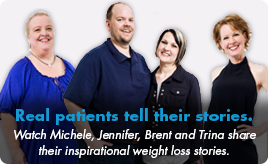
I sit here today thinking about how different the last year has been. April 20 was the one year anniversary of my weight loss surgery. Some may not think it is a big deal or that it was the easy way out. I have to say it was not easy at all.
There are many things that go into weight loss surgery. You have to learn to eat properly, psychiatric balance and learn to live again. The weight loss surgery is only a tool that helps those in need lose the weight. I had the sleeve surgery. It was a big decision and at first was met with a huge resistance from my husband. After we watched videos I explained why I wanted it and the benefits to the surgery it was a “go.”
For the couple weeks leading up to my pre-op diet I ate absolutely everything I wanted to. I have no other reason why as only I thought I would never eat again. That really is funny. Yes I went thru the detox of caffeine and junk food — that was so rough. The pre-op diet really gets your head in the right place. The first few days after surgery I asked myself why did I do this?
Yes it is painful but here’s the deal, you forget very quickly the pain. I have gone thru an emotional roller coaster at times. When you look in the mirror you can still see that “big” person you were at times. You can look at clothes and think or even say out loud my fat butt cannot fit into that only to find out they are actually too big. Yes, it has happened to me.


You learn to eat. It is no longer about clearing the huge plate of food in front of you. It is about measuring food, by that I mean a regular portion size, not a Texas portion size, eating on a saucer and eating to survive. Yes I do eat good food also, I love ice cream and I am not giving up my Mexican food — it is about moderation now. Today I look at food as a tool to live my life. I have learned what not to say to children and how to really teach them to eat properly and not overeat just because. It is about teaching them it is okay to not finish your plate of food, eat until you feel almost full. I have learned what my sleeve does not like, including white bread. The pain associated with white bread is a nightmare! Some can eat it, I am just one of the ones that cannot.
Why do I say all of this? This has been an exciting year and so many great things have happened. My husband and daughter had the surgery. Both of their health problems have become so much better or non-existent. I have a new grandbaby, whom I cherish so much. I can walk for hours with him, get on the floor and roll around and literally do the things I was scared I would never be able to do.
I have a couple coworkers and friends are scheduled for the surgery coming up and love that I can be a support for them. I had a goal and of course the doctor had another goal for me. But I hit mine a while ago, still need to lose 20 pounds to reach my doctor’s goal. All I wanted was to be a size 10. To some that is crazy and think why that size? That was the last size I truly remember being happy with myself. I surpassed that goal. I am now in a size 6/8.
I have been ashamed and embarrassed at times at what my weight was and where I am now. The day of my weight loss surgery anniversary I hit a total of 100 pounds lost! I am officially 147.6 pounds. I started this journey at 248 pounds and a size 20/22.
So you ask would you do it again? Yes, in a heartbeat! I got my life and my future back. Thank you Nicholson Clinic for all your support.
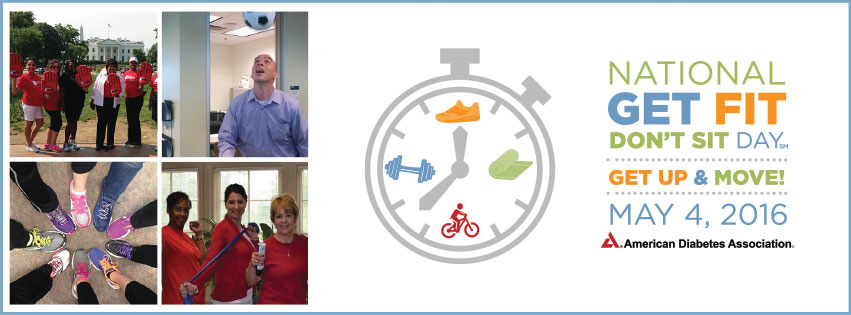
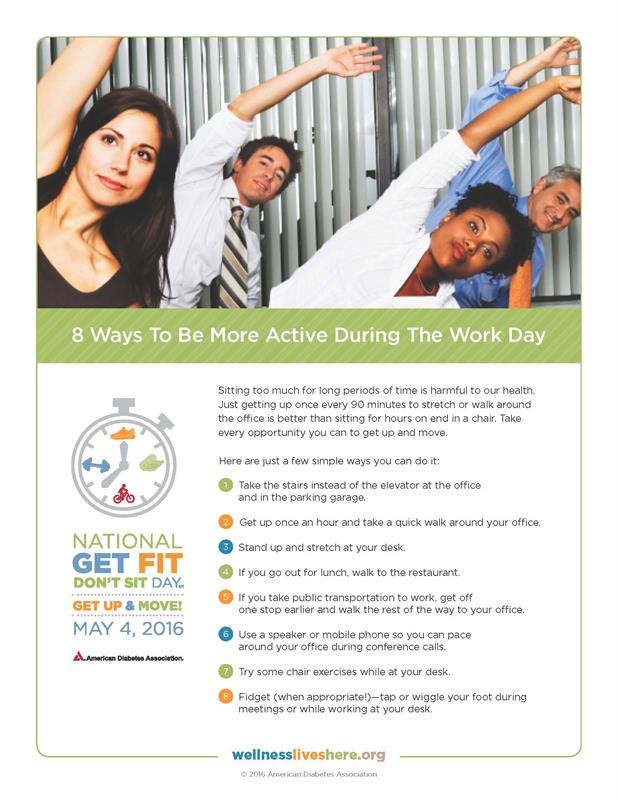
Today is the American Diabetes Association’s first Get Fit Don’t Sit Day. So don’t just sit there! We at Nicholson Clinic pledge to get up and get moving at least every 90 minutes – today and every day!
Research shows that changing our sedentary habits is one of the most effective ways to prevent type 2 diabetes.The American Diabetes Association recommends that everyone get up and move every 90 minutes. Check out these creative ways to stay active throughout the day!
By Sheri Sellars, RN, Nicholson Clinic Nurse Educator
Smart food choices following bariatric surgery are critical to your health and success. It is important to follow all diet guidelines to help you shed pounds after surgery and maintain a healthy weight for life.
Beginning right after weight loss surgery, you will begin the first phase of your post-op diet — the liquid phase. This diet phase can be the most difficult as your body is recovering from surgery and you are adapting to your new way of life. The lack of variety in the liquid diet can be challenging and even frustrating. Here are some helpful tips to get you through the liquid diet and ensure you are getting proper nutrition.
Protein, Protein, Protein
During this phase of your post-op diet, you should be consuming a daily minimum of 60 grams of protein. Protein drinks should make up the majority of your fluid intake. Be sure your protein drinks contain at least 25-30 grams of protein per serving — any less than that is ineffective.
Acceptable Drinks and Liquids
In addition to protein shakes and drinks with 25-30 grams of protein (or more) per serving, other acceptable liquids include: broth or stock (stock is more hearty); Crystal Light; unsweetened almond milk or soy milk; sugar-free popsicles (not fudgesicles!); G2 and Powerade Zero; and decaf tea or coffee with unsweetened creamer.
When it comes to broth or stock, homemade tastes much better than canned. Bone broth contains numerous minerals and vitamins that can help improve your overall health. (Read more here.)
Check out these recipes for a delicious and nutritious homemade broth and stock:
• Alton Brown’s Chicken Stock
• The Pioneer Woman’s Beef Broth
Drinks and Liquids to Avoid
Just because it is a liquid doesn’t mean it is good for you or should be consumed during this critical phase of your post-op diet. Avoid acidic products such as lemon and tomato products (tomato juice, V8, tomato soup, etc) as these will cause stomach pain.
Fruit juices (even watered down fruit juices) should also be avoided as they are high in sugar and calories an void of any real nutrition. Diet fruit juices are also very acidic and, like tomato products, can cause stomach pain.
It is recommended to avoid cream-based soups for the first 14 days after weight loss surgery. Milk products can be difficult for the stomach to digest, resulting in stomach pain.
Carbonated beverages will destroy your new sleeve or pouch and should never be consumed at any time after weight loss surgery. This means leaving sodas, sparkling juices, water and beer in your past.
No Cheating Allowed
Eliminate the word “cheating” from your vocabulary. Cheating during this phase of your post-op diet can have life-threatening implications. Most patients will experience hunger by the end of the liquid phase. It is a sign you are healing well. However, it is still important to stick to liquids only for the full 21 days.
Acknowledge Your Emotions
Food is an emotional stronghold for many people, which often leads to obesity. We eat when we’re grieving, depressed, celebrating or just plain bored. Breaking the link between food and emotions can be very challenging, but is a critical step on your journey.
You have made a decision that will impact you for life. While your new lifestyle is for your overall health and happiness, the permanence of this change doesn’t come without its fair share of emotions. After the excitement settles down, the reality settles in. There can be a mourning period for how you used to live. This is healthy and normal, as long as you use this as the launching pad to change your life.
Recognize that you will be emotional, and it’s perfectly normal. Hormones are stored in body fat and during this phase, you will be burning fat at a very rapid pace, releasing these hormones into the blood stream to be processed by your body.
Other Survival Tips
• Sip all day long, particularly your protein drink and homemade stock.
• Don’t watch evening television, and avoid watching any cooking shows or The Food Network.
• Don’t watch your family eat if it bothers you.
• Stay active and busy.
• Avoid social situations that revolve around food.
Most importantly, remember you will eat real food again. The liquid phase only lasts 21 days. You can do anything for three weeks! The staff at Nicholson Clinic is committed to being With You All The Way. If you are struggling, have questions or need encouragement, we are here to help!
For encouragement and support from others on the same journey, join our Facebook Patient Support Group. Click here to join the private group.