
















By Sheri Sellars, BSN, RN
Nicholson Clinic Nurse Educator
Most adults are keenly aware of what it takes to improve fitness and maximize health, even in the most generic sense. It is also true that many struggle with the internal motivation required to make these changes long-term. Fortunately, this is a digital age and technology exists to assist in both finding and maintaining motivation! Here are four modern options to assist in identification of motivation and provision of ongoing support that you may not have known are out there.
Online Health Communities — Whether the focus is on weight loss, nutrition or specific health topics (such as diabetes), there are bulletin board communities that provide instant access to a supportive network of like-minded individuals seeking out similar goals. These communities provide opportunity to connect on a day-to-day basis through both seeking and offering support, including articles, pictures, recipes, workout routines, coupons, ideas and personal conversation through the written word. Most communities require registration and some charge a fee for access to certain features, though basic features are often free. Features can include diet or fitness tracking, a food or recipe database and adjustable criteria to help identify personal goals. Two popular online health communities include: SparkPeople and MyFitnessPal.
StickK — Many have tried nearly everything to nudge themselves out of inertia and into motivated achievement, only to despair that nothing seems to work for the long haul. If you fall into that category, pay a visit to StickK, which harnesses the psychological power of loss aversion. With help from StickK, your goal is defined, the steps to meet that goal identified clearly and a contract formed. Fail to meet your goal? Your credit card will be charged a preselected amount you name and given to either an unnamed charitable organization or, even more powerfully, to an organization that you disagree with. As an additional motivational safeguard, the option is given to name a referee of your choosing. This individual will receive an email to verify the progress reports you submit. Lost money can pack a powerful punch. Money lost to an entity you despise, even more so!
Gym Pact — Maybe you are more motivated by rewards. If so, give the Pact app a try. This app sets you up in a community with others who have individualized goals they are trying to reach, which may or may not be the same as yours. With this app, you identify a specific goal, track your progress in the app and read cash rewards when you meet them, paid for by those who did not meet their own. Goal achievement is verified through GPS readings, photos or other services. The app syncs with FitBit and MyFitnessPal as one means of tracking. Fail to meet the goal you set for yourself and you will be the one paying toward those who did meet theirs, activating both positive reward psychology as well as loss aversion psychology.
Motivation Grid — If you are the kind of person who enjoys visual motivation in the form of videos, quotes, articles and instructions, you may find value from Motivation Grid. Topics range anywhere from entrepreneurial encouragement to implementing mindfulness to increasing your reading speed. Many of the guidelines given for various things have applicability across the board for all kinds of goals. Improving time management improves the ability to eat or work out on a schedule. Eating or working out on a schedule fuels creativity. Increased creativity channels better time management. Around and around it goes. The site is overwhelming with good ideas and the potential for perspective.
Whatever may be holding you back, the bottom line continues to be the need for self-implementation of behaviors that carry forward toward who we ultimately want to be. The above sites and countless others exist to provide assistance such as has never been seen prior to the digital age. Investigate which may be right for you. Motivation is not a static concept, but rather grows and changes moment to moment and day to day. Stack the odds in your favor by taking advantage of the modern age we live in. Investigate how your phone or computer in combination with the Internet has the ability to raise the bar and channel the results you desire.

By Misty Harris, LCDC, SAP, NCAC, DWI-E
Nicholson Clinic Bariatric Patient
April is National Alcohol Awareness Month. Bariatric patients are at higher risk of problems associated with alcohol consumption, including DWI and addiction. Let’s take a closer look at the dangers of alcohol for the bariatric patient.
What is alcoholism? Alcoholism is defined as continued excessive or compulsive use of alcoholic drink and/or a chronic disorder marked by excessive and usually compulsive drinking of alcohol leading to psychological and physical dependence or addiction. Why is this important to the bariatric patient? We have heard from our doctors do not drink alcohol after surgery. How many have listened to that advice? Did your doctor or nutritionist explain why? Unfortunately like some other advice that we get we do not listen, we learn the hard way.
Why is it so important to not consume alcohol after bariatric surgery? When you have bariatric surgery, what is left for a stomach is very small. Bariatric surgery results in alcohol moving much more quickly from the stomach into the small intestine. Eighty percent of alcohol is absorbed in the small intestine. Bariatric surgery results in a much higher peak BAC (blood alcohol content) than with the equivalent amount of alcohol consumed before the surgery. What kind or how much alcohol you consumed before surgery no longer matters. Following weight loss surgery, you can find yourself intoxicated after just half a glass of wine.
The number of DWI arrests has increased with bariatric patients over the last ten years. According to a recent study conducted with a controlled group of bariatric and non-bariatric patients, the bariatric patient had a greater peak alcohol level. To the surprise of many, the bariatric BAC was above .08 while the non-bariatric was around .05 with the same amount of alcohol and time. This is a 40 percent increase of alcohol absorption.
The DWI legal limit in the State of Texas is a BAC of .08 and/or not having normal use of mental or physical faculties because of alcohol or drugs. It is possible for anyone to be stopped and receive a DWI. If you are a bariatric patient and believe you can consume more alcohol, you are more likely to receive a DWI. The BAC calculators that many use do not calculate for bariatric surgeries. Do not depend on them.
What is also happening is that some individuals have the bariatric surgery to appear more attractive instead of for health and wellness gain. While there is nothing wrong with the outcome of feeling more attractive, health and wellness must be the key focus. It has been researched and documented that when you do not address the issues of the food addiction in the past, you may start using alcohol to cope with the problems. The addiction transference is more prevalent in bariatric patients. It is very important to address any issues you have regarding food. If you have used food to cope with your feelings and are no longer able to eat, what are you going to turn to? You can be faced with the decision of eating 500 calories and still feeling miserable or drinking 500 calories and not feeling anything. What would you chose?
Please do not feel discouraged. You are not in this alone. Continue your follow-up care and speak open and honestly to your doctor. They are there to help and guide you, not to judge. Please do not feel discouraged to reach out for help. There are many qualified professionals that can help guide you. The Nicholson Clinic will refer you to a professional that can guide you in the right direction. We are all just a phone call away.
 About the Author
Misty Harris is a practicing, Licensed Chemical Dependency Counselor (LCDC), Substance Abuse Professional (SAP) and First Offender DWI Educator in the State of Texas. She has been practicing for over 10 years. She currently works in Collin County for Life Management Resources and is an independent educator with Achieve Counseling and Education Services. Misty is also a bariatric patient from the Nicholson Clinic and had weight loss surgery on April 20, 2015. She can be reached at 469-795-1571.
lifemanagementresources.com
acesntx.com

We love hearing stories of how weight loss surgery has helped improve our patients’ lives. Randa Scudder is an assistant principal of an elementary school. When her weight kept her from being able to do her job, Randa turned to Nicholson Clinic for bariatric surgery. This is her story.
“I was a successful teacher for eleven years. During that time my weight went up and down. I was a good teacher but walking up a flight of stairs to my classroom wore me out. I was exhausted by the end of the day. I rarely had the energy to do anything after school. When I became an administrator I put on even more weight. I ate out all the time because I told myself that I didn’t have the energy cook. I got absolutely no exercise because I told myself I didn’t have the time. I realize now those were lies that I told myself.
“I thought about weight loss surgery for a couple of years. I had tried tons of diets and even lost 100lbs at one point but I could never keep it off. In my mind weight loss surgery seemed like giving up. I told myself that I could do it on my own that I didn’t need surgery. I would tell myself that I was educated, successful and had a great life. While those things were true I realize now that I didn’t have the life that I truly wanted.

“The final turning point for me in my decision came on a day just like any other. I was an assistant principal of an elementary school. I got up, went to work and performed my normal AP duties until about 10:00am. I got a call on my radio that one of our students had run out of the building. My school was on a four lane street with extremely heavy traffic. Of course I immediately went into problem solving mode. I headed toward the door to where the student was. I moved as fast as I could. He was running down the sidewalk. I was following. I was so out of breath and I wasn’t even running. I couldn’t run. I was too fat. One of our teachers heard the radio call and thankfully responded. He passed me and caught up to the student. He was able to keep the student safe. I wasn’t. I had failed at my job. It was that moment that I realized that I could not keep my students safe at the weight I was at. I decided then that I would do something about it. That something was to have the Gastric Sleeve.

“I had my surgery December 21, 2015. It is honestly the best thing I have done for myself and my students. The day I walked into the Nicholson Clinic I weighed 417lbs. Today I weigh 220lbs. I still have more that I would like to lose but I am so thrilled with how far I have come. I am amazed at what I am able to do now. Just today alone I walked up 21 flights of stairs, walked over 4 miles at school, took a kickboxing class and then did two loads of laundry when I got home. I have more energy than I have ever had in my life. I am able to perform my job better than ever, but most importantly I know that now I have the stamina and energy to keep my students safe.”


When the craving hits hard for something sweet, there really isn’t anything that can stand in our way. However, there is a right way and a wrong way to indulge in a sweet snack when you feel the need. Not everything in this world that tastes good is bad for you; it is possible to satisfy your sweet tooth in a healthy way.
Chocolate lover? Avoid milk chocolate, dark is the new skinny. If you are going to reach for some chocolate, dark chocolate is the way to go. A dark chocolate that is more than 70 percent cacao is packed with antioxidants and fiber and can actually help to lower blood pressure. We don’t recommend that you eat one chocolate bar a day though—they can still be high in sugar—but this is a great substitute for milk chocolate when you just can’t say no. Even better, we encourage you to try ChocoPerfection Dark and Milk Chocolate bars in place of a high sugar candy bar. ChocoPerfection bars are low in sugar, high in fiber and will keep your body in the fat burning zone when used in moderation.
Here are a few guilt-free recipes to try:
Chocolate Peanut Butter Fat Bombs
Ingredients:
1/2 cup organic virgin coconut oil
1/2 cup natural peanut butter or almond butter (with less than 5 grams of sugar)
2-3 Tablespoons unsweetened cocoa powder
2-4 tablespoons Agave (or sweetened to taste) NOTE: If using these in a Keto diet you’ll need to go with a keto-friendly sweetener like Stevia)
Splash of vanilla extract (optional)
Directions:
Melt coconut oil and peanut butter in a large skillet over low heat. Stir in cocoa powder. Stir in agave. Remove from heat and add vanilla extract (optional). Transfer to spouted cup and pour mixture into silicone candy molds. (Approximately one tablespoon each.) Freeze or refrigerate until set. Remove from molds and store in the fridge in an airtight container. Enjoy one fat bomb when you’re having a sweet craving or to curb your appetite. Note: These bombs are the bomb, but a little can go a long way as they are calorie dense. So, limit yourself to no more than one bomb every so often and not daily.
Chocolate Banana Cashew Smoothie
3 oz. nonfat vanilla Greek yogurt
1/2 frozen Banana
1/4 avocado
1/2 cup spinach
1/2 cup chocolate soy milk
Small handful of cashews
1/2 cup ice or water
Directions:
Add all ingredients to a good blender, set to smoothie option, and blend to desired consistency. For an extra boost of protein you can add 1 scoop of Relaunch Unflavored protein to the chocolate soy milk before adding this to the remaining ingredients.
Banana Peanut Butter Ice Cream
Makes 2 servings. We suggest limiting yourself to 1 serving only.
Ingredients:
2 bananas
1 tablespoon creamy peanut butter
Directions:
Peel the bananas, slice them and freeze them for at least two hours. Place the frozen bananas in a food processor with the peanut butter and blend well. Enjoy it immediately or freeze in a glass container until solid.
KIND bars can also be a great way to get more healthy whole grains in your diet. They are typically right around 150 calories per bar and have some deliciously sweet flavors like dark chocolate chunk or peanut butter dark chocolate. Not to mention, they only have around eight grams of sugar per bar and contain only real ingredients that you can actually pronounce. Be careful with “healthy” snack bars like KIND and other brands, however, as they often contain added sugar. (Here’s a look at the fat, calorie and sugar content of KIND bars.)
The latest trend that is starting to catch some traction is dessert tea. Stash™ is a great brand with some really delicious new teas that will satisfy your sweet tooth. With flavors like Salted Caramel Mate, Vanilla Nut Crème and Red Velvet, these teas are decadent.
For some of us, avoiding the craving for something sweet happens multiple times per day. Instead of diving into a sweet filled with sugar and saturated fat, give one of these a try so you can eliminate the feeling of regret after your sweet snack. You will be proud of yourself in the long run and maybe even lose a few pounds.

We all know exercise is essential for health, but sometimes finding motivation to make fitness a part of our daily routine is a struggle.
Sound familiar?
You’ve probably heard it said that it takes doing something for 21 consecutive days to create a habit, but it’s not always that simple. Are you still motivated on day 25 when it’s cold and rainy outside and you’d just rather stay curled up on the couch?
The good news: it is possible to create new, healthy habits in your life, but it takes real effort and some creative thinking along the way. Here are seven tried and true methods to help you get motivated to work out.
Reward Yourself — It’s human nature to be motivated by rewards. The brain latches onto a reward, making the link that a particular behavior is worthwhile, increasing the odds a routine becomes a habit, says Charles Duhigg, author of The Power of Habit: Why We Do What We Do in Love and Business. Over time, your brain will begin to recognize exercise as reward enough, as physical activity triggers a surge of endorphins, a.k.a. “feel good hormones.” Hint: be sure you’re choosing non-food rewards so they don’t become a hindrance.
Don’t Put Away Your Gear — We use visual cues to wake up our brain and remind us to complete important tasks in every day life. Why not lean on visual cues to help keep exercise at the forefront of your mind? Keep your sneakers and exercise gear in plain sight so forgetting to exercise can never be your excuse.
Be Accountable — Don’t allow yourself to live in a bubble. Verbalize your health and fitness goals to family, friends and your community on social media. Post your exercise routines on Facebook or Instagram as a means of chronicling your progress. You might be surprised who will follow your progress and notice when you’re slacking off.
Find a Buddy — When you have a pal who is counting on you to meet him at the gym, you’re less likely to skip your workout for the day. Find a buddy with similar goals, or start attending exercises classes at your gym and make new friends. Consistent workout partners can become a tight-knit support group, and these are the people who will hold your feet to the fire when you’re lacking in the motivation department.
Sign a Contract — Create a contract between yourself and a buddy that outlines a penalty you will owe — monetary or not — if you don’t follow through. Studies show that people who sign longer contracts are more likely to exercise than those who agree to shorter durations. “We have to get past the initial experience of displeasure in order to recognize the longer-term benefits,” says Jeremy Goldhaber-Fiebert, PhD, assistant professor of medicine at Stanford University who studies health decision science. “The challenge is designing tools to help make that happen.”
Identify What’s Holding You Back — Thinking positively and visualizing the outcome is only one piece of the puzzle. You must also identify what’s holding you back. In one study of 51 female students who claimed they wanted to eat fewer junk food snacks, researchers asked each woman to imagine the benefits of nibbling on better foods. Those who were able to identify what was holding them back from making healthier choices, and devised a plan to reach for fruit when cravings hit were most successful at sticking to their goal.
Get Paid — Let’s face it: money talks, and believe it or not, there’s even an app that will pay you for working out. Pact helps you earn cash for healthy living. The catch is that you’ll pay up if you don’t stick to your goals. If you miss a workout session, you authorize the app to charge your credit card or PayPal account. When you reach your goal, you get paid out of a pool funded by community members who break their pacts.
If it’s your goal to make physical activity a priority, the first step is simply to start. Find an entry point into exercise, whether it’s joining a gym or workout group or watching fitness videos on YouTube. Take the leap and then build habit by employing these tips and tricks to help you stay motivated.

By Jeremiah Bailleu
Meal prepping is the process of planning and preparing meals ahead of time. For most of us, cooking isn’t something we want to do every single night. Meal prepping is a great way to help you reach your fitness goals without being overwhelmed by the need to prepare a healthy meal each day. To help you get started with a meal prep routine, just follow these simple rules.
Purchase the Right Containers — Your to-go containers are the first step in getting you started. Invest in small, reusable to-go containers, such as Glad or these found on Amazon.
Pick Your Prep Days — Select a day our two each week to do your cooking. Generally, choosing one day during the week and another on the weekend (such as Sunday and Wednesday) works well to spread things out a bit. On your prep day, cook a large enough quantity to be able to pack to-go containers for the next few days while at home, work or on-the-go.
Know Your Nutritional Requirements — For a balanced diet, you need to make sure you are getting the right types of foods, and the right amount of protein, carbohydrates and fat. There are thousands of balanced weight loss diets you can find online with detailed information on what foods you need to maintain a healthy weight, or even lose a few pounds. If you need a little extra help planning meals that meet your nutritional needs, schedule an appointment with a registered dietitian.
Make Your Grocery List — Planning what you will buy ahead of time will make your trip to the store much faster. As a bonus, you’ll spend less money on things you don’t need and may even save yourself a trip back to the store for something you forgot. Once you know what kinds of foods you want to buy, be sure to plan to get just enough to prep enough meals in your to-go containers for the next few days. Here are some of our favorite items to use when meal prepping:
• Grilled Chicken
• Quinoa
• Broccoli
• Brown Rice
• Frozen Veggies
• Salmon (or other fish)
Like anything, the meal prepping process probably isn’t something that you will knock out of the park on your first attempt. This is where it gets fun. Each time you do it you will not only get faster and faster, but also come up with new foods and recipes that you can add to your diet each time you prep. Before you know it you will be putting together small nutrition packed meals that will help you save money, and also reach your weight loss goals.
Are you mastering the meal prep? Share your photos and favorite meal-prep recipes with us on Facebook and Instagram!

By Sheri Sellars, BSN, RN
Nicholson Clinic Nurse Educator
Do you spend all of your time caring for and looking after others, leaving little time for yourself? What if you became empowered to take care of yourself? How could it impact your own health and wellness?
There is a lot of attention paid these days to the idea of mindfulness and self-care, particularly as relates to those who spend their time caring for others. This is a healthy and useful movement that can lead to an increased quality of life and islands of inner peace and happiness. What if, however, you have no idea how to do this?
Life can be overwhelming, particularly if you are the caregiver for another, such as children or an aging spouse or parent. Many of us have no practice in living purposefully, with a busy world that overwhelms us and takes over from day to day, until we are simply surviving rather than thriving. Ultimately, everyone benefits if we take care of ourselves inside and out, leaving a greater reservoir of emotional and physical resources to utilize when caring for our families and a greater sense of satisfaction, both in the work that occupies our days as well as the leisure time we seek.
Below are beginning tenets of self-care that can help you prioritize your own needs and create mental awareness of what those needs are.
Befriend Yourself — The beginning of self-care has as its foundation the necessity of realizing you are both deserving of and worthy of time and attention, not only from others but also from yourself. This requires you to recognize that you matter. All of those whom occupy your thoughts and time need you. This alone underlines your importance. Be on your own side and give yourself the kind of credit that you would for relatives or friends who make the kinds of efforts and sacrifices that you do. Your life’s work is important and you are worthy of your own affection.
Self-Compassion — Everyone lives with regrets, some long-standing and others that crop up in the day-to-day dealings of life. Moments of impatience, anger or disenchantment can lead to a vicious cycle, where exhaustion fuels one, which then fuels further exhaustion. When you find yourself musing over the frailties of the day, respond to yourself in a compassionate way. Turn these experiences into inner strength, both by giving yourself credit for recognizing things are not necessarily how you would like them to be and through performance of a root cause analysis that can help you identify how to avoid breakdowns between intentions and actions in the future. Remember, you can be your own friend. Generosity of spirit toward yourself creates an inner mental environment in which you can honestly assess contributing factors, such as fatigue, stress, anger management, etc, and then more openly recognize what may help you cope better in the future. Turn guilt into empowerment.
Acceptance — A large part of self-compassion relies on being truthful to yourself. Perhaps you aren’t enjoying this phase in your child’s life. Perhaps your spouse’s work schedule has left you without adequate support. Not every season of life will be sunshine and roses. Admitting this to yourself provides opportunity to honor your pain and extend forgiveness and compassion for your natural reaction to less than ideal circumstances. This, in turn, provides opportunity to recognize and accept life as it is, rather than as we wish it were. Focusing on the truthful reality removes the angst that comes with “might have been.” From this, resolutions for coping can grow.
Enjoy Life —This tenet may seem insultingly simplified, particularly during times when things are hard. However, the desire to enjoy life asks the question “What would make today better?” Identify what would help you enjoy the day more by setting intentions. Be realistic, specific and keep it simple. Engage the help of others and tap into resources without guilt or guile.
By exploring the role of self-care, you can increase your energy, find inner contentment, increase life expectancy and add joy to your days. Ultimately, all those you care for benefit, not only from your ability to keep going but also from the example you set.

Each year, about 45 percent of Americans make New Year’s Resolutions, but only about eight percent of people will actually keep their resolution and achieve their goal.
Why are New Year’s Resolutions so difficult to keep? Often times it’s because we fail to make resolutions that are practical and measurable. Failing to put into place plans and support can make it more difficult to reach our goals.
If you’ve made a resolution to be more active, get fit, and live healthier this year, here are five tips to help you carry your resolution out through the end of the year and turn it into a lifestyle change to live a stronger, healthier you in 2017 and beyond.
Keep it simple. The first trick to making a New Year’s Resolution you can keep is to keep it simple. Your goal should be clear and specific. Don’t make too many resolutions. Instead, focus on one goal, such as “I will lift weights three times each week.”
Get into a routine. It takes about 21 days to create a habit. Plan out a daily routine to help you stay on track. If your resolution is to exercise more, think through your schedule and choose a time for your workouts that you can keep consistent day-to-day and week-to-week.
Find accountability. None of us can do it alone. Find a friend or family member you trust to help hold you to your resolution. Better yet, choose a friend who has a similar goal so you can hold each other accountable and kept the motivation going.
Track your progress. The best resolution is a measurable resolution. Use a calendar, journal, or app to track your progress and evaluate your accomplishments throughout the year.
Celebrate the milestones. A year is a long time, and if you don’t take time to appreciate the progress you make along the way, you’re likely become discouraged at some point on your journey. While your goal for the year may be to lose a certain amount of weight, take time to celebrate the small milestones along the way. Track your weight loss at the end of each week and be proud of your accomplishment in moving toward your goal.
It is possible to set a New Year’s Resolution and actually achieve it. Make SMART goals that are specific, measurable, attainable, relevant, and timely. Find a buddy who will help keep you on track, and don’t forget to take time to celebrate your progress along the way.
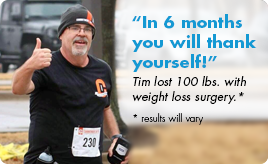
One year ago, Tim Morgan, 50, was told his right coronary artery was 99 percent blocked — a recipe for disaster. After getting the news from his cardiologist that he was at risk of having a second heart attack (he suffered a major heart attack when he was 44), and having a fifth stent placed in his heart, Tim set out to lose weight and improve his health condition. On his own, Tim wasn’t successful.
In the spring of 2016, Tim turned to Nicholson Clinic to help him shed the extra weight and improve his heart health. In December, after losing more than 100 pounds, Tim ran in — and finished — the Dallas Marathon, a feat he never would have been able to accomplish prior to weight loss surgery.
This is Tim’s story of transformation.
When I hit my 40s it was difficult for me to maintain a decent weight. I wasn’t really obese but I was considered overweight at 220-225. I thought I was at a healthy weight. I went through phases of working out then stop for a while. When I was 44 I woke up in the middle the night and felt as if I had an elephant on my chest. I had all the classic symptoms of a heart attack. My wife rushed me to the emergency room and it was confirmed that I was in the middle of a major heart attack. Within two days, I had four stents placed in my heart. I had three major blockages and my “widow maker” was 98 percent blocked. I was told I was literally minutes of being dead with the heart attack. While in the hospital I was also diagnosed with type 2 diabetes, in addition to high blood pressure, high triglycerides and high cholesterol. My weight was up to 255 at that time. Afterwards I lost weight again down to 215-225. It was a cyclical situation.
In 2010 my wife got pregnant with our youngest, I got “pregnant” too. Within the nine months of her pregnancy, I gained about 70 pounds. I stopped watching what I was eating and stopped going to the gym. I was fat and unhappy. I stayed around the 280’s and before I knew it I was at my all time heaviest at 320. Walking was painful and I would run out of breath just doing simple things. I also developed sleep apnea. I was very uncomfortable, self conscious and depressed. Just everyday life was painful. My feet, back, knees, legs — everything hurt. I had low energy and low self-esteem. It all went hand and hand. I had heart disease, was a diabetic, had high cholesterol, high triglycerides, high blood pressure, sleep apnea, low testosterone — I was very unhealthy both physically and emotionally.

Why did you decide to have surgery?
In January 2015 I had to have another angiogram due to a bad stress test result from a stress test the previous December. My cardiologist found that my right coronary artery was 99+ percent blocked and at the age of 50, stent number five was placed in my heart. I was mortified. I tried to lose weight again on my own but kept hitting a wall. The following summer I had enough and after talking to friends that have had weight loss surgery (including my wife) I made the decision to have the surgery with the gastric sleeve as my choice.
What is life like after surgery? How has it changed?
I had the gastric sleeve surgery on April 25, 2016. My life after surgery is like a new life. I can do things I never thought I could or would be able to do. My energy level is incredible, my health is great, I no longer have type 2 diabetes, high blood pressure, high cholesterol, high triglycerides, sleep apnea, low testosterone. I still have heart disease because of it hereditary nature, but I am now the healthiest I have ever been. At my last stress test, my cardiologist told me I am able do whatever I wanted to do because my heart is perfect. In addition, my self-confidence is so much better than before. I can walk without being out of breath. I can go in a store without having to lean on the cart so my legs and back don’t hurt.
What inspired you to begin running? Why do you enjoy running?
I knew if I was going to be successful with my surgery, I needed fitness goals. I didn’t set out to be a runner; I just knew I needed to move. I have a friend who had the gastric sleeve three years before I had mine and admired his discipline to run. With the influence of some other friends that encouraged me to do it, my wife and I began the journey of running. My goal was not necessarily to run a marathon but just to learn to run. After joining Lifetime Fitness in Garland, we were introduced to their run program and started running with them. I joined the 10k training June. I ran my first 5k on July 4, 2016. After completing the 10k training, we went right into marathon training. My goal was just to run a half marathon by end of November. The more I ran the more I enjoyed it. Running became my “therapy.” I enjoy it because I feel I am in control; it’s freeing to be able to run and see progress every week.


Prior to surgery, what kind of physical activity did you do?
Prior to surgery I had a difficult time doing any physical activities. Before I gained my weight I would work out periodically, bike ride but was never a runner. I wasn’t an athlete, I was an average guy trying to maintain.
Who/what is your inspiration?
My inspiration was and still is my wife, my family and my own health. I also look up to several friends that have and continue to be great encouragers. When I got to the end of the marathon and was in pain due to an inflamed IT band in my right leg, I continued to run and blocked out the pain because I knew I had to finish. I wanted to show others that it can be done. I was NOT going to quit. I overcame several obstacles in training, having the flu and being off a week, injuring my right IT band, which kept me from running the two weeks before the marathon to allow it time to heal. I was determined not to quit. A friend, who is an ultra marathoner, wanted to pace me to get me through. He was an incredible source of inspiration and encouragement for the 26.2 miles. The final inspiration was visualizing crossing the finish line for the marathon and seeing my family and friends there. When I crossed that finish line, it was truly an emotional experience. It was a journey that I never thought would be possible, especially less than eight months after my gastric sleeve surgery.
What would you like to say to someone who might be considering weight loss surgery?
Realize the surgery is a tool and not the end to a means. You have to follow the rules. Realize it is a life long decision to good health, psychological, emotional and physical. Have goals. Without goals you’re setting yourself up for failure, just make sure they are realistic. Wait…I just completed a marathon in less than eight months from my surgery…the sky is the limit go for the unreachable and charge after it. The surgery has been the best decision for myself. I have set an example to my family for good health finally. I would suggest that they do their research, find a great clinic (I highly recommend The Nicholson Clinic), ask lots of questions, get in a support group and go for it! I am a new man now as a result of mine. I truly took my life back.

Diabetes is a serious health concern that affects nearly 30 million Americans. It is the seventh-leading cause of death in the United States.
November is American Diabetes Month and Nicholson Clinic wants you to be educated on diabetes, its relation to obesity, and how weight loss surgery may be able to help reduce your risk.
What is diabetes?
Type 2 diabetes is a weight-related health concern that develops when the body becomes insulin resistant. This means the body either does not produce enough insulin or the body does not properly use what insulin is produced. Insulin is necessary to regulate blood sugar levels and break down the sugars and starches you eat into glucose. Insulin carries the glucose to the cells in the body, where is then used for energy.
Approximately 1.25 million American children and adults have type 1 diabetes — a chronic in which the pancreas produces little or no insulin.
When the body does not make proper use of insulin, glucose builds up in the blood stream, which can cause other health complications such as skin disorders, nerve damage (neuropathy), and eye problems like glaucoma, cataracts and diabetic retinopathy. It also increases risk of high blood pressure, stroke and heart disease.
Am I at risk?
Weight is the single best predictor for type 2 diabetes — almost 90 percent of people living with type 2 diabetes are overweight or have obesity — but there others factors that may increase your risk, such as: age, race, pregnancy, stress, certain medications, genetics or family history and high cholesterol.
Since the 1990s, rates of diabetes have increased by one-third, in direct correlation to the rapid increase in the prevalence of obesity in the United States.
To find out if you are at risk of developing type 2 diabetes, take this risk assessment from the American Diabetes Association.
How can weight loss surgery help reduce my risk?
Type 2 diabetes may be preventable with lifestyle changes, such as weight management, regular exercise and a healthy diet. Studies have found that losing five to 10 percent of body weight can prevent or delay the development of type 2 diabetes in adults who are high risk for the disease. Researchers have also found that weight loss surgery may deliver a more lasting method for the prevention of type 2 diabetes.
“While weight loss surgery isn’t necessarily a panacea, recent research indicates it can have a profound effect on diabetes symptoms in obese patients who undergo procedures to help them shed pounds,” says Dr. Nick Nicholson. “Some patients may even find the need to take diabetes medications to control blood sugar goes away after weight loss surgery helps rid them of extra pounds.”
In a study published in the Journal of the American Medical Association conducted by the University of Pittsburg Medical Center, researchers examined the potential benefits of bariatric surgery in the prevention or improvement of diabetes symptoms. To find out how big of an impact surgery could have on diabetics, researchers worked with a group of 61 obese diabetics ages 22 to 55. Researchers broke the main group into two smaller ones that would undergo different types of surgery and a third group that was prescribed lifestyle and exercise changes to control their symptoms.
Over the course of the study, researchers found that patients in the two surgical groups showed more marked improvements than those in the lifestyle group. About 40 percent of gastric bypass and 29 percent of adjustable band patients, in fact, were able to achieve complete or partial remission of diabetes symptoms over time.
“The findings are especially encouraging for those who struggle both with their weight and control of diabetes symptoms,” Dr. Nicholson says. “Weight loss surgery may indeed serve to help some reverse the impacts the disease has on their lives. Maintaining weight is simply vital for diabetics who wish to gain an upper hand on this disease and its potential side effects. Surgical intervention can make a big difference for those deemed obese or morbidly obese.”
If you’re dealing with diabetes or any other weight-related condition, contact Nicholson Clinic today to discuss your candidacy for bariatric surgery. By taking the steps to lose weight and live a healthier lifestyle, you can potentially eliminate a variety of life-changing and even life-threatening conditions.