


















Update September 2019: Jaimee continues her journey toward health, fitness and wellness. She admits that finding a trainer who understands the unique needs bariatric patients need in fitness training has been a challenge. Trying different forms of exercise, including Pilates, eventually led her to yoga, a form of fitness for “every body.” But when she could not find a yoga instructor who met her needs, Jaimee decided to once again take her health and fitness into her own hands. She completed the training to become a certified yoga instructor.
Today, Jaimee teaches group and private yoga lessons, including a monthly class offered free of charge to all Nicholson Clinic patients. “I wanted everyone to see the benefits of yoga,” she says. “Having walked the walk, I felt I was good to be the voice that says, ‘Yes! You can do this and anything else you put your mind to.’”
Jaimee’s Story (Originally published Aug. 18, 2015)
In August 2014, my family and I traveled to Mexico on vacation. At 332 pounds, I was devastated and embarrassed to have to request a seat belt extension from the flight hostess. To further my devastation, my daughter and husband felt they had to make themselves as small as possible so that I would be able to be somewhat more comfortable traveling. Then while we were there, I wanted to parasail but was told by an awkward young man that I weighed too much to complete the expedition safely. The final insult to injury was, while I was able to slowly keep up with our traveling party wherever we went, I spent one day of vacation unable to leave the bed for the pain in my feet, back, and knees.
During this time, stuck in our room, missing out on vacation, I was reminded of a recent doctor’s appointment where my physician frankly told me that if I didn’t “do something” about my weight, then I would be lucky to have 10 more years with my family. We had lost my sister Gayla, 38, a few years earlier, and I could not hurt my parents, my husband and daughter, and my friends by dying young, too. I had seen that devastation and didn’t want to add to their misery. Then I did the math and realized that my daughter would only be in her 20’s in the next decade! I would not leave her so early if there was something I could do to prevent it.
This line of thinking led me to also remember that my husband and parents had spent the better part of three years practically begging me to have bariatric surgery. I remembered being offended and insisting that I could do it on my own. I spent those years trying and failing to lose weight, exercise, and eat right. A little more math and I figured out that I had gained 110 pounds in less than a decade. How would I be able to lose what I had gained and 50 more in order to be considered a healthy weight?
The night after we returned from our vacation, I took a deep, shaky breath and told the love of my life, “I don’t want to die.” I asked if his offer to support me and care for me through bariatric surgery was still good. I had spent the day reading up on it and explained that our entire life would change. What we ate, what we did, everything would be altered.
This man, who will have my heart forever, embraced me and my decision, reminding that my body was not like a “normal” person. He said it “betrayed” me at every turn. I had sleep apnea and had to sleep with a machine to keep me breathing. I also suffered with high blood pressure, migraines, hypothyroidism, and high cholesterol. In the previous five years, I had been hospitalized three times for suspected strokes because my blood pressure was so high and migraines so tormenting.
From this conversation, there were the ones we had with my parents and our daughter. All were on board and ready to make this decision a reality. For my first information meeting, my husband had to travel for work so our daughter insisted that she would go with me. She said, “I want to know that this is the right thing for us to do.” The fact that she was involved and she said “us” sealed it for me. This is what I would do.
Dr. Roshek of The Nicholson Clinic led the information meeting, explaining all options available. He also explained how most people gain weight back on regular diets because of a hormone ghrelin that made you think you were hungry, even if you weren’t. Dr. Roshek explained the statistics and surgery options so well that my daughter was able to enlighten her father about what to expect, even using air quotes when she explained the difference between the Lap-Band and the gastric sleeve—“Sure the Lap-Band is ‘reversible’ in that the device can be removed but your stomach stays in that shape.” We chose the gastric sleeve option.
From this point we proceeded with Nicholson Clinic and an exploratory EGD, which showed I also suffered with a hiatal hernia on top of my other ailments. I thought, “How have I survived this long, much less the next 10 years?” Once we had a surgery date with Dr. Nicholson, I began to share the news with those closest to me. There were mixed reactions, but the people who mattered the most said, “If this is what YOU want, then you have my support.”
After surgery in December, there was time for healing. However, I figured out pretty quickly that walking made recovery so much better. I started walking. And walking. And walking. That got boring so I took it to the gym…a gym for which I had been paying for years yet using only sparingly, Lifetime Fitness. I found my trainer Aaron Frisvold and, one month after surgery, I joined Lifetime’s 90-day challenge at the encouragement of Aaron. I was elated the first time I ran a mile and ecstatic the first time I ran two miles. Aaron continues to motivate me to hit those firsts. You could have knocked me over with a feather when I found out that I had won the 90-day challenge!
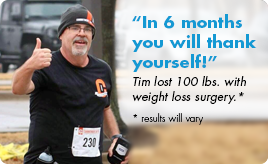
Today we began the next 90-day challenge at Lifetime. I have every intention of winning this too. However, I feel like I am already a winner. I took on this lifelong challenge and am a whole new person for it. In April, it was discovered that I no longer need blood pressure medicine. Shortly after that, I didn’t need the sleep apnea machine when I slept. By the end of May, I had hit the 100-pounds-lost milestone. The weight loss has slowed significantly, and I have turned to looking at my muscle definition and body mass index for the progress. Aaron gets excited about the number of calories the fancy scale says I burn because of my lean muscle.
In the beginning, I sported a 53 BMI. Today, that is down to 35 BMI. To date, I have lost 118 pounds and have 44 left until I hit my personal goal weight of 170 pounds, a weight I could identify with being happy with my body. Also, at my last doctor’s visit, my thyroid looked good and my cholesterol was “normal.”
The most amazing thing that I have gained in all of this is self-confidence. For the first time in my life, I am proud of me, inside and out. I love the life that is blooming all around me. My husband and I greet each day for the adventure that is a life without the burden of being overweight and unhealthy. We have even adopted a weekly date night where he joins me at the gym. He has also discovered that he is a rock star at cooking healthy.
My gratitude overflows for everyone involved. To the Nicholson Clinic, thank you for your expertise and continued support. To Aaron and all the trainers at Lifetime, thank you for all of the high-fives and atta-girls that keep me running and pumping that iron. To my friends who have been my workout buddies and cheerleaders and those who have loaned me clothes, thank you. To my parents, thank you for the emotional and financial support to make this a reality. Thank you for reminding me that I am always your “pretty baby.” To my daughter, thank you for reminding me that I have to love me as much as I love anyone else if not more. Thank you for demanding that I stick up for myself. To my darling husband, thank you for making me admit that I needed help from everyone, for learning to cook healthy, and for being my biggest fan.
Do you have a story of transformation to share with us? Send it to us at social@nicholsonclinic.com.

As a leader in bariatric surgery, Nicholson Clinic is pleased to announce our surgeons now utilize advanced robotics during bariatric procedures. Bariatric surgery has evolved in recent years, and this new technology can improve and positively impact patient outcomes, as explained by Dr. Nick Nicholson in a recent Facebook Live video.
The latest development in robotic surgery is known as the da Vinci Xi. This robot is the fourth generation and the most advanced robotics currently available for bariatric surgery. The da Vinci Xi robot allows surgeons to perform not only general surgery, but also minimally invasive gastric sleeve and gastric bypass surgery without fully opening up the abdomen, reducing risk to the patient and improving patient outcomes.
The da Vinci Xi robotics system allows Nicholson Clinic surgeons to utilize tiny instruments and a few small incisions in the abdomen with real-time adjustments for every movement of the surgeon’s hand. Guided by our trained surgeons, the robot is able to bend and move in unique ways that traditional instruments are not able to do. A high-definition, 3D camera provides the surgical team with real-time views inside the patient’s abdomen. The reduced risk of complications means most patients will experience shorter hospital stays with less pain, which can be a factor in a patient’s long term outcomes.
To stay at the leading edge of bariatric surgery, Nicholson Clinic is continually implementing new technology and has helped many medical device companies train doctors worldwide on best practices for new medical equipment. Nicholson Clinic is dedicated to staying at the forefront of technological advancements, so it’s only natural that our three surgeons would embrace the da Vinci Xi as a way to benefit our patients who come to us seeking weight loss surgery from not just from North Texas but all over the world.
Because this equipment is only available at the top tier of hospitals throughout the country, there are only a handful of bariatric surgeons in the U.S. with the credentials to operate the da Vinci Xi robot. We are proud to now be able to offer this new, safe and effective technique to our patients.

At the heart of the Nicholson Clinic is Dr. Nick Nicholson, one of the nation’s leading bariatric surgeons. Dr. Nicholson understands that surgery is only part of the weight loss equation, so he brought together a team of specialists and developed a comprehensive plan to treat the whole person—from first appointment, to surgery, recovery and beyond. Our patient care goes above and beyond what other bariatric practices offer. Here is an overview of the Nicholson Clinic support available to all patients.
Patient Care Advocate
Following your consult with the surgeon, you will be assigned a Patient Care Advocate, your one-on-one concierge to help you through the entire process leading up to surgery. All of our PCAs are also Certified Medical Assistants.
Since there can be several steps leading up to surgery, especially if using bariatric insurance coverage, your PCA team is here to help you navigate the journey to surgery and serve as your primary point of contact with the Nicholson Clinic. Some insurance plans often require dietitian and psychologist appointments, sleep studies, lab work, clearances, etc. We also require our patients to complete a two-week pre-op diet to help prepare you for a safe, effective surgery.
Your PCA will help you through every step so you have best possible pre-surgical experience and ensure you are cleared and ready for surgery.
Patient Educator
Candace Peppers, MA is our Patient Educator. In her role, Candace provides patient support and education before surgery, after surgery and for life.
There are important diet requirements before and after surgery. To help patients with this, Candace has recorded four videos available on our website. These “Class with Candace” videos can be found here.
Pre-op Class — Helps patients prepare for surgery. In this video, Candace covers the two-week pre-op diet plan, reviews a sample pre-op diet menu and provides ideas on what to eat to best prepare your body for surgery. Remember, the pre-op diet is mandatory in order to shrink your liver and ensure a safe operation.
Post-op Class Stage 1 (Days 1-21) — This is the phase when patients must consume only liquids. In this video, Candace covers an approved sample menu, ways to incorporate protein and the importance of vitamins and medications.
Post-op Stage 2 Class (Days 22-41) — During this phase, patients can start eating soft foods and then transition into solid foods. In this video, Candace reviews a sample menu, protein recipes and foods to try, as well as what to avoid and other general guidelines to follow as you adjust to your new stomach.
Maintenance Class (Days 43 and beyond) — In this video, Candace covers helpful tips and what to eat to stay on track to maintain your weight loss. There’s also a helpful “Food Source List” you can download and a “10 Day Reset” that many patients reference if they’ve fallen off track.
Patient-to-Patient Support Group — Candace also hosts monthly Patient-to-Patient Support Group. Previously held as monthly meetings in our office, we’ve recently moved to a virtual format enabling more people to attend, no matter where they live. Patients can watch live or go back and watch anytime at their convenience. These are posted in the Nicholson Clinic Facebook Support Group, a group only open to Nicholson Clinic weight loss surgery patients. During the P2P virtual meetings, patients are invited to ask all types of questions and get answers.
Facebook Support Group
Any patient who has had or is scheduled for surgery is invited to join our closed Facebook Support Group page where patients go for inspiration, to help each other out, ask questions, get feedback from Candace and patients, post victories and struggles. This group is a welcoming community and a great way to connect with other patients on the same journey.
To join the Facebook support group, click here. Once verified as a patient, you will be added to the group.
Complimentary Support Calendar
Our monthly calendar is updated and posted monthly on the website, both on the homepage and under “Weight Loss Support” (click “Download Support Class Schedule”). It’s also posted in our clinic and shared on our social media each month!
Everything on our calendar are available FREE for life for Nicholson Clinic patients. These events include:
Facebook Live@Lunch — Held every month on our Facebook Page, Live@Lunch covers a variety of topics including medical support, psychological support, diet or fitness and a wealth of other helpful information patients may need to navigate the process.
Psychological Support — This is an important component for any patient. Weight loss isn’t just a physical battle; it is also mental and emotional. To be healthy physically, you must be healthy mentally. In addition to the monthly P2P Group and Facebook Support Group, our patients have access to Baylor’s quarterly support group meetings led by Dr. Jay Ashmore, the Clinical Director of the Baylor Plano Behavioral Health Center. Dr. Ashmore facilitates this support group meeting using science-based approaches to present topics relevant to healthy behavior and weight loss.
Groups are held at Baylor Scott & White in Plano and begin at 5:30pm with a group mixer, followed by the session with Dr. Ashmore at 6:00pm. Anyone who is interested in having or has already had Weight Loss Surgery is encouraged to attend and family and friends are welcome.
Nutritional Support
For nutritional support, in addition to Candace’s nutrition videos, Baylor offers pre-op nutritional classes the 2nd and 4th Wednesday of each month from 12:00-1:00pm And Post-op nutritional classes held the 3rd Wednesday of each month from 12:00-1:00pm. These classes are held at Baylor Plano Hospital in the 5th floor conference room.
Our partners at PsyMed also offer a Facebook Live monthly on their Facebook Page featuring Renell Cronk, Registered Dietitian.
Fitness Support
For fitness we offer two complimentary classes each month:
Get Fit with Rock Fitness — We have group fitness classes held once a month on a Saturday morning at 9:00am. These classes are usually at our Plano clinic location on Independence in the conference room and they led by Marilyn Hoyt, Certified Personal Trainer and owner of Rock Fitness. Marilyn also offers one-on-one and group fitness classes at her studio in Farmersville, Texas. Contact her at rock.fitness2010@gmail.com for more info.
Yoga with Jaimee — Jaimee Hunter is a Nicholson Clinic patient and Certified Yoga Instructor. These classes are also offered once a month at 6:30pm, usually a Tuesday, at our Plano clinic location on Independence in the conference room. For those new to yoga, this is a great introduction, and for more experienced yogis, Jaimee will walk you through options for a greater challenge. Jaimee also offers additional classes at her facility. Contact her at info@yogawithjaimee for more info.
Follow-Up Care for Life
Follow-up appointments are a crucial part of your success as a patient. Following surgery, we suggest you schedule follow up appointments at one-to-two weeks, six weeks, four months, eight months, one year and annually from there on. It is important that you return to our office for long-term care. Your commitment to keep up with follow-up appointments, educational sessions and support group attendance will serve to assure your optimum health and success during your weight loss journey.

Medical tourism is on the rise with both Americans traveling across the U.S. and abroad for services and foreigners coming to America. This can be a great way for patients to seek specialty care with world-class providers; but be wary when traveling outside of the United States, particularly to Mexico for bariatric surgery.
Per the American Society of Metabolic and Bariatric Surgery (ASMBS), “Accreditation and other measures of quality control vary widely depending on the country in which the services are being provided. There is no worldwide standard of care, and therefore, there is no way of ensuring that the same safeguards are in place that we are accustomed to in the U.S.” There is an imposed risk without the same standard of regulation in place.
While traveling to Mexico for bariatric surgery can seem financially appealing, it also comes with a great deal of risk. As recently reported just this month, one patient died and seven were left sick in Utah after traveling to Tijuana for bariatric surgery. According to the Utah Department of Health, each patient tested positive for antibiotic-resistant Pseudomonas aeruginosa bacteria. All these patients saw the same surgeon and were referred by an online service marketing weight loss surgery in Mexico to U.S. residents.
Similar cases have occurred nationwide among people seeking healthcare in Mexico. The CDC is investigating the current bacteria outbreak, which was first announced in January. And these are not new findings. Each year we’re seeing reports of patients with complications and medical issues after having bariatric surgery in Mexico. The reality is, while you might be saving money on the procedure itself, you could be left with additional medical expenses and life-threatening complications that outweigh any possible savings.
Bariatric surgery is now commonly performed and is a safe operation in the U.S. Bariatric surgery in the U.S. is generally as safe as gall bladder surgery, hip replacement and a hysterectomy. The mortality rate is 0.2 percent–far lower than other elective operations performed today.
In addition to safety and quality control, the other consideration is your pre-op and post-op care. Remember weight loss surgery success is not just the procedure itself, it’s the education, support and consistent medical care you receive before, during and after your surgery. We recommend follow-up appointments at one to two weeks, six weeks, four months, eight months, one year and yearly going forward. Your commitment to keep up with follow-up appointments, educational sessions and support group attendance will serve to assure your optimum health and success during your weight loss journey.
While we know cost is an important deciding factor, we’re committed to helping every patient who needs weight loss surgery–no exceptions. Insurance coverage, finances or payment methods should not be a roadblock. We accept most major insurance. And if you don’t have bariatric coverage on your policy, or if you don’t qualify, there are other options. We offer one of the lowest self-pay prices in the U.S., along with financing and low monthly payment options.
Both Dr. Nicholson and the Nicholson Clinic have been recognized by professional organizations and patients for excellence in health care. In addition to numerous local and regional awards, the Metabolic and Bariatric Surgery Accreditation and Quality Improvement Program (MBSAQIP) recognizes Nick Nicholson, MD, FACS as an MBSAQIP Verified Surgeon for Baylor Scott & White Regional Medical Center at Plano. And the Nicholson Clinic surgeons operate at a Baylor Scott & White facility that has been awarded the Blue Distinction designation by Blue Cross Blue Shield.
If you are considering bariatric surgery, don’t compromise. Find out why over 15,000 patients from 48 states and 10 countries have traveled to DFW to seek our care. We encourage anyone considering surgery to make an appointment with one of our doctors to learn about your options.
At the Nicholson Clinic, you have access to the nation’s top surgeons, world-class facilities and affordable, compassionate care, right here in North Texas.

By Adam Brown, PA-C
If you are scheduled for or have already had bariatric surgery, it is normal to have questions about what to expect after surgery. While each patient’s experience can vary, there are some common questions we get asked by patients after surgery. Here are five of the most common frequently asked bariatric post-op questions.
- Why do I have nausea and vomiting after surgery?
Immediately after surgery you may experience some nausea due to the anesthesia and/or pain. Stapling across the stomach will naturally create a level of nausea. However, these are typically short-lived and you will receive anti-nausea and pain medications right away to help eliminate discomfort or nausea immediately after surgery.
In the first few weeks after surgery you may experience some waves of nausea due to a lack of protein intake and dehydration. Patients are required to drink at least 64 ounces of water and consume 60 grams or more of protein daily. Sometimes this can become a vicious cycle: patients may be nauseous and not want to drink their protein shakes, but then the lack of nutritional intake makes them more nauseous.
The best thing patients can do is take anti-nausea medication as recommended and do whatever it takes to ensure all nutritional and hydration conditions are met. This will optimize weight loss, give you strength and energy, help you heal faster, and keep you out of the emergency room.
- How do I ensure I’m getting enough hydration/nutrition?
Many of our patients don’t experience any nausea or vomiting and are able to consume water and protein with no problem. For others, this is a challenge.
The best advice I give my patients is to dilute their protein shakes and water together to make it more tolerable. This takes care of the concentration in protein shakes, helping with the consistency, taste, and smell, making them far more palatable.
I also encourage changing protein brands. All protein shakes taste different from one another and some are better than others. Find a protein brand you can tolerate. You may have to try several different brands before finding the right one.
For variety, we recommend changing protein flavors—chocolate, vanilla, strawberry, or even flavorless—and types—whey, dairy, plant-based, egg white. This will help combat taste fatigue (getting tired of the same taste over and over again). Bone broths fortified with protein are another option and have more protein per serving compared to standard chicken, turkey and beef broths.
- What kind of vitamins should I be taking?
Nicholson Clinic recommends Bariatric Advantage vitamin packs for our patients. These vitamin packs are specifically designed for and made with bariatric patients in mind.
However, there are other vitamin options to choose from. The key is to make sure you are getting all the necessary vitamins you need after bariatric surgery. We do not recommend Flintstone vitamins or gummy vitamins as these typically do not have sufficient levels of everything bariatric patients need after surgery. Gummy vitamins may also contain artificial sugars, which may not be beneficial to metabolic health.
Some more tolerable forms of vitamins our patients use include liquid forms, or even chewables. Pills can upset any stomach, let alone a stomach after bariatric surgery.
Remember, patients are not required to take vitamins until two weeks post-op.
Refer to your bariatric packet, or our website, for exact vitamin specifications.
- Should I focus more on my diet or exercise?
Short answer: both. Everyone should be exercising at least 150 minutes per week, while maintaining a healthy, well-balanced diet. Your diet should be high in various proteins, colorful whole fruits and vegetables containing plenty of fiber and healthy fat sources.
However, when it comes to obesity medicine, we now know a lot more with respect to the roles exercise and diet play in weight loss. What you eat contributes to 80 percent or more of weight loss. If the diet is off, not even intense exercise can correct excess fat storage in the body.
Moreover, we know that the most important thing to consider in your diet is exactly you are eating, with the second most important thing being how much you are consuming (volume per sitting and overall caloric intake).
Focus on reprioritizing proteins such as meats, dairy products, legumes and nuts as your top fuel source, with plenty of whole fruits and veggies as the second-most common food consumed. Consume healthy fats such as avocados, almonds, and flaxseeds, and avoid excess carbohydrates and sugars such as pastas, breads, rice and white potatoes.
Keep in mind that your body needs some carbs and sugars, but you can get this naturally from whole fruits and vegetables. If you keep your protein high, the carbs and sugars you consume will generally fall in place.
And never drink your food. This means no juices, shakes or smoothies. Also no easy liquid calories such as sodas, sweet teas, lemonades and excessive alcohol. Before you know it, you’ll consume the recommended daily calorie intake before lunchtime.
- How do I prevent my new stomach from stretching out over time?
The key to preventing your new stomach from stretching is to adhere to the medical diet as discussed above. Diets that are high in excess carbohydrates and sugars tend to have a lower satiety index, or feeling of fullness, compared to proteins, whole fruits and veggies and healthy fats.
It can be easy to overindulge on overly processed, heavily starchy, calorie-dense foods because they are less filling. These foods can also be addictive. Consuming these foods can be a slippery slope leading back into bad habits and slowly stretching the stomach to account for larger volumes of food consumed during meals. Sugars, carbs and starchy foods are also easy for your body to store as fat for later energy expenditure whereas proteins and fiber-rich foods target excess fat storage.
Bottom line: keep your protein levels high and eat plenty of colorful, fiber-rich fruits and vegetables (and a nice variety of both throughout the week), with a good serving of healthy fat sources in order to stay fuller longer, burn more calories during normal digestion and specifically target excess body fat stores.
About the Author
Adam Brown is a nationally certified, state licensed Physician Assistant for the Nicholson Clinic. He helps assist the bariatric doctors in surgery, sees patients for pre-op and post-op care, interprets labs and imaging, and provides the latest evidence-based patient education available.

Obesity is a common, complex, chronic metabolic disease, yet there is a dangerous stigma around the disease that prevents many people from seeking help. It’s time to end the stigma.
The obesity epidemic has reached an all-time high, as nearly 40 percent of adults and 19 percent of youth in America are obese. Nearly 70 percent of Americans are considered overweight, and more than two billion people who are overweight suffer from weight-related health problems, according to the National Center for Health Statistics.
Obesity is the leading cause of preventable death in the U.S. and is responsible for more than 500,000 deaths each year. Why is carrying around excess weight so dangerous for your health?
The longer an individual is obese, the greater his or her risk of developing weight-related conditions such as heart disease, stroke, type 2 diabetes, cardiovascular disease, arthritis and even certain types of cancer. Obesity also leads to diminished quality of life and can lead to early death. Depending on the severity of the disease, obesity could shave 10 years off your life.
Obesity is also costly. The estimated medical cost of obesity in the United States is approximately $147 billion per year. According to the American Society for Metabolic and Bariatric Surgery (ASMBS), individuals with obesity have 42 percent higher healthcare costs than people of normal weight; for people with severe obesity, that number jumps to 81 percent.
The good news is that obesity is treatable, and it should not be ignored. Bariatric surgery (also known as weight loss surgery) is the “standard of care” for treating obesity. Yet, the ASMBS estimates less than one percent of the 24 million U.S. adults who may qualify for a bariatric surgery have the procedure each year. Why is this number is so low?
There is a stigma around obesity and seeking help to control weight. Much like mental health, we need to break down the stigma. Going to a counselor or therapist when you are feeling sad or overwhelmed should be as normal as going to the doctor when you have the flu. Going to see a weight loss expert should be the same mentality. It’s OK to not be OK. It’s perfectly normal to struggle with your weight and need the help of an expert. And it’s better to go get some assistance now rather than wait until it’s a real health problem.
It is important for you to know that obesity is no longer considered a lifestyle choice or simply the result of a lack of will power. The American Medical Association (A.M.A.), World Health Organization (W.H.O.), along with many medical societies now recognize obesity as a chronic progressive disease resulting from multiple environmental and strong genetic factors.
If you struggle with your weight, there are viable surgical and non-surgical options worth exploring. It’s time to be proactive with your health and take preventative measures. Put a solid eating plan in place to prevent weight gain and live an active lifestyle. Keeping track of your food intake and activity level will help you examine your lifestyle and stay accountable.
If you are among the nearly 40 percent of Americans who are struggling with obesity, and your weight cannot be controlled by diet and exercise alone, I encourage you to seek help the help of an expert. You can do something about it, and you should do something about it before it’s too late.
Contact us today to schedule a one-on-one consultation with a Nicholson Clinic doctor to help you make the best decision based on your individual needs. Make yourself a priority. You are important. Your health is important. Don’t be afraid to reach out. We want to help you get healthy!

Hernias affect millions of people worldwide and occur due to a variety of reasons. A hernia is a condition when part of an organ bulges through a weak point in the abdominal muscle. The most common types of hernias are inguinal (inner groin), incisional (resulting from an incision), femoral (outer groin), umbilical (belly button) and hiatal (upper stomach – this is the one that causes acid reflux.) One lesser-known type of hernia is one that occurs in the abdominal wall following breast cancer removal and breast reconstruction.
Causes of hernia
Hernias may result from:
- Trauma — heavy lifting, injury, a penetrating wound, even childbirth.
- Genetics — many people are born with a congenital hernia.
- Prior Surgeries — an estimated 15 to 20 percent of incisions may not heal properly at the muscular level and hernia may form as a result, such as after spinal surgery or breast cancer reconstruction.
Symptoms of hernia
The most obvious symptom of an abdominal wall hernia is an abdominal bulge. Other symptoms may include pain, nausea, hearing or seeing intestinal movements within the bulge and/or a cramping and/or bloating sensation.
Hernia after breast cancer reconstruction
Many breast cancer patients chose to use skin tissue from other areas of their body, rather than silicone implants, to rebuild the shape of their breasts after surgery to remove cancer. During this breast reconstruction surgery, a “flap” is created using the patient’s own skin, fatty tissue and sometimes muscle to form a new breast.
There are various types of autologous flap procedures, but tissue for reconstructing the breast most often comes from your abdomen, such as in a TRAM (transverse rectus abdominis muscle) flap, a DIEP (deep inferior epigastric perforator) flap, and a SIEA (superficial inferior epigastric artery) flap.
TRAM flaps are the most commonly performed type of flap reconstruction, but they are also the most high-risk for developing a bulge or hernia because these procedures take all or part of the underlying rectus abdominus (your “six-pack” muscle) along with skin and fat to reconstruct the breast. The DIEP and SIEA flap procedures spare the muscle completely which helps preserve core strength and minimize risk of a bulge or hernia, however, if the nerves that power the muscle are compromised, it can become paralyzed and lose strength. This makes the abdominal wall weaker and more prone to a hernia or bulge.
Treatment for hernia after breast cancer reconstruction
Hernias don’t go away on their own and will only grow larger and get worse over time, causing more pain and discomfort, so it’s important to have them addressed. Surgery is typically the recommended treatment to ensure the hernia is fully repaired.
If you have a hernia that has occurred as a result from a flap procedure, Nicholson Clinic can help. We specialize in hernia repair and abdominal wall reconstruction. During the procedure we will replace any herniated organs within the abdominal cavity, close the hernia and reinforce the area to make it strong.
Dr. Thomas Roshek, Nicholson Clinic Abdominal Surgeon partners with Dr. Trovato, Plastic Surgeon with Dallas Plastic Surgery Institute to combine an abdominal wall reconstruction with any other body contouring procedure during the hernia repair. Any further remaining excess skin is removed, and the muscles are reconstructed and tightened, improving the shape and strength of the underlying support tissue. This creates the tighter, smoother appearance of the abdomen, pelvis, and core.
If you are experiencing a hernia and interested in repair and abdominal wall reconstruction, contact the Nicholson Clinic to make an appointment with me for a medical evaluation and to discuss options. If the hernia repair is due to a breast cancer removal and reconstruction, it is typically covered by insurance.

Making the decision to even have bariatric surgery is a big one. It often takes many of our patients up to two years to think about it, do their research and finally make the decision. Ironically, one of the most common statements we hear from patients after surgery is “I wish I would have done it sooner!”
Nevertheless, losing weight with the help of bariatric surgery is still a process for which you certainly want to be prepared. A big part of the decision is not just whether or not to have surgery, but where should you go and who do you want your surgeon to be?
Here are five key things to think about when considering weight loss surgery:
1. Credentials
Seeking a credentialed surgeon is key as it ensures the highest standards, best outcomes, continued training and education, research and innovation on the latest advancements. Your surgeon should be:
- Board certified in General Surgery by the American Board of Surgery, and a specialist in multiple advanced bariatric procedures.
- An active member of several organizations, including: American College of Surgeons (FACS); American Society for Metabolic and Bariatric Surgery (ASMBS); and Society of American Gastrointestinal and Endoscopic Surgeons (SAGES).
Each Nicholson Clinic surgeon has these qualifications and memberships in addition to others. At Nicholson Clinic, we also teach and train other surgeons, both at national conferences and in the operating room. We also participate in research, contribute to various scholarly articles and have been featured as bariatric experts in various television and magazine interviews.
Keep in mind that credentials speak to the quality of both the surgeon and the hospital at which you will have your surgery. Find out if your surgeon is qualified by the Metabolic and Bariatric Surgery Accreditation and Quality Improvement Program (MBSAQIP). MBSAQIP recognizes Nick Nicholson, MD, FACS as an MBSAQIP Verified Surgeon for Baylor Scott & White Regional Medical Center at Plano. The Blue Distinction Center is another nice credential to have. Our surgeons operate at a Baylor Scott & White facility that has been awarded the Blue Distinction designation by Blue Cross Blue Shield.
2. Experience
Experience doesn’t necessarily just mean how many years has one been practicing. Some surgeons only specialize in a certain procedure or perhaps have a narrow focus. It’s better to have a surgeon who specializes in a multitude of minimally invasive bariatric and abdominal procedures so they know how to handle a variety of abdominal issues. And some might only do a small quantity each year; perhaps what some practices do all year, we might do in a month. Volume of surgeries is key! When considering a surgeon’s experience, look for:
- Years in practice
- Number of surgeries
- Wide variety of procedures and techniques
- Low complication rates
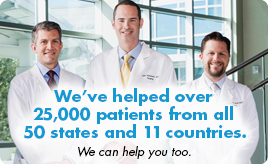
Over the past 19 years, Nicholson Clinic has helped over 15,000 patients — making it one of the most experienced clinics in the country — with low complication rates. We also have patients who travel to us from around the world to seek our care. We’ve seen patients from 48 states and 10 countries.
3. Referrals
Referrals from physicians, peer/community recognition, family/friends and even testimonials from past patients can be helpful in making your decision.
Of most importance are referrals from your physician, such as from your Primary Care Physician or a speciality doctor. Many of our patients have obesity related health conditions and are referred to us by cardiologists, gastroenterologists, endocrinologists, etc.
Peer reviews and recognitions published through various sources can be another great source. Nicholson Clinic surgeons have received a number of awards and recognitions based on peer reviews and nominations. Most recently, all three of our surgeons were named “Best Doctors in Collin County” by D Magazine. We have also received “Super Doctors” recognition by Texas Monthly. Each of these designations are selected through nominations, votes and input from other acclaimed physicians in the area. We’ve been honored to be on these lists for several years now.
4. Friends and Family
We often see husbands and wives, siblings and friends of our past patients. These patients come to us because they have witnessed first hand the transformation — not only in weight, but in health, confidence, happiness and overall demeanor. These patients have also had the opportunity to see what it’s really like going through the pre- and post-op process.
For those who do not have a family member or friend who has had surgery, on our website, you can find many testimonial videos and stories from past patients. These stories show a variety of people who underwent different types of weight loss surgery for a number of different reasons.
5. Support
Support is a significant piece of the process. A patient’s success is not just about the surgery, it’s about all the support that should come with it — before, during and after surgery.Nicholson Clinic offers pre-op, post-op and maintenance support to all of our patients. Our patients receive a multitude of support options right from the start — nutrition, fitness and psychological well-being — and it continues for life!
We have partnered with psychologists, dietitians and fitness experts to offer one-on-one support, group support and online support. Part of our unique program at Nicholson Clinic is complimentary monthly classes that include yoga instruction, a fitness class and a patient-to-patient support group. Through Baylor, our patients also have access to pre-op and post-op nutrition classes and a quarterly support group.
Nicholson Clinic Patient Educator, Candace Peppers, produces pre-op and post-op videos posted online for our patients to view at any time. We also do monthly Facebook Live events on various topics and Q&A sessions for patients, in addition to providing a wealth of information on our website, blog and social media pages.
Finally, consider your personal comfort level and find a doctor with whom you connect. This is why the initial consultation with a doctor is so important. You should feel comfortable asking questions and have a doctor who will customize a program for you. It’s not a one-size fits all approach and you should feel good about your decision and your treatment option. In addition to the doctor-patient connection, consider the other medical providers and staff members you work with along the way as well. This is one area that truly sets the Nicholson Clinic apart.
Each of our patients are assigned a Patient Care Advocate (PCA). Your PCA is your one-on-one concierge to help you through the entire process leading up to surgery as there can be several steps along the way. We also have insurance specialists who help you navigate the insurance process to maximize your benefits and minimize your out of pocket. We have partners in pharmacy and lab and a full medical staff to answer questions and provide support along the way. Our entire staff is committed to your success, from the front desk staff to the medical staff to the back office. We are with you all the way.
If you are considering bariatric surgery, give us a call to schedule a consultation!

Congratulations to all three Nicholson Clinic surgeons, Brian Long, MD, Nick Nicholson, MD and Thomas Roshek, MD for being named among the Best Doctors in Collin County for 2019 by D Magazine.
The selection process for this honor is a rigorous one as it begins with peer nomination and ends with online voting. The annual Best Doctors ranking kicks off each year with a confidential poll sent to local doctors in general practice and specialty fields. Physicians are asked to nominate two others in each specialty field they would be willing to send their own patients or loved ones to for care. Once an initial list is cultivated and vetted, an online polling phase kicks off so doctors not included in the initial poll may also vote.
For 19 years, Nicholson Clinic, led by founder Dr. Nick Nicholson, has worked to become a national leader in bariatric surgery. This achievement is testament to the fact that Nicholson Clinic’s excellence in patient care is recognized not only by our patients, but by other physicians in the area.
“We are medical professionals who are not only committed to the highest standards of surgical technique but wholly committed to excellence in patient care,” says Dr. Nicholson, the founder and lead surgeon at the Nicholson Clinic. It is with this commitment that Nicholson Clinic has helped more 15,000 patients from over 48 states and 10 countries achieve their health goals.
Each of our surgeons is focused on on long-term results for their patients and have seen countless numbers of cases entirely reverse weight related illnesses. Nicholson Clinic patients receive ongoing support through a variety of channels, including access to clinical psychologists, nutritionists, fitness coaches and online support groups. Our end goal is to help our patients adjust to a long-lasting healthy lifestyle.
Drs. Nicholson, Long and Roshek each specialize in all aspects of weight loss surgery, from gastric sleeve to bypass to revisional weight-loss surgeries and all three have dedicated their lives to helping their patients see transforming results.

What’s your New Year’s Resolution? Weight loss is one of the top New Year’s Resolutions made each year. While the motivation to lose weight may differ from one person to the next, making the decision to drop those extra pounds can yield some powerful health benefits.
Carrying around excess weight can have some significant negative effects on your health. These consequences can range from uncomfortable to catastrophic. Being overweight or obese can impact normal, day-to-day activities, such as walking, driving, sleeping, and even breathing. The longer you’ve been overweight or obese, the higher your risk of developing weight-related conditions such as arthritis, type 2 diabetes, cardiovascular disease and even cancer.
Hear more from Dr. Nick and Nicholson Clinic Patient Educator, Candace Peppers.
Being overweight also leads to a diminished quality of life and may decrease your lifespan. Obesity is responsible for more than 500,000 deaths each year and depending on the severity, may cut 10 years off your life.
Worldwide, more than two billion people are overweight and suffer from health problems because of it. Being significantly overweight or obese is a serious health threat and it should not be ignored.
Nicholson Clinic is known for bariatric surgery, but we also offer non-surgical weight loss programs designed for people who are struggling to lose weight with diet and exercise alone but aren’t yet experiencing significant health concerns from their weight. From dietary advice and fitness direction to behavioral support and pharmaceutical interventions, if your goal is to lose weight in 2019, but you aren’t ready for or don’t qualify for weight loss surgery, we can help.
Under the direction of Gloria Gonzales, RN, APN, our Non-Surgical Weight Loss Program can provide you with the guidance and support needed to achieve your goals and avoid the long-term consequences of being overweight.
At your initial visit, we will conduct a thorough assessment of your past medical, surgical and psychological history. We will then request baseline lab work and discuss if a registered dietitian and psychological evaluation is needed. We’ll also provide helpful counseling to determine the best approach going forward. From here we schedule monthly visits for continued evaluation: physical, psychological, nutritional and medication refill.
To learn more about our Non-Surgical Weight Loss Program, click here.