















Más de 500,000 procedimientos de extirpación de la vesícula biliar se realizan cada año, por lo que es uno de los procedimientos quirúrgicos más comúnmente realizados en los Estados Unidos hoy en día. La cirugía para extirpar la vesícula biliar (colecistectomía) es el tratamiento más común para los trastornos graves de la vesícula biliar.
La obesidad mórbida es un factor de riesgo para la enfermedad de la vesícula biliar. Los pacientes obesos que requieren cirugía de vesícula biliar y pérdida de peso pueden minimizar las complicaciones si primero se someten a un procedimiento de extirpación de la vesícula biliar.
Los pacientes con obesidad y cálculos biliares sintomáticos deben someterse a una colecistectomía primero antes de someterse a un bypass gástrico.
En un estudio sueco, los investigadores analizaron los datos sobre los pacientes que se sometieron a una cirugía de extirpación de la vesícula biliar y los que se sometieron a un bypass gástrico Roux-en-Y. Algunos de los pacientes se sometieron a uno de estos procedimientos, y otros tuvieron ambas cirugías por separado o simultáneamente.
Entre los que se sometieron a ambas operaciones, las personas que optaron por la cirugía de pérdida de peso primero tenían más probabilidades de experimentar complicaciones que las que se sometieron primero a la extirpación de la vesícula biliar.
Si los cálculos biliares de un paciente no muestran ningún síntoma, no deben someterse a cirugía. Esto puede causar complicaciones para los pacientes que no se preocuparían en absoluto por sus cálculos biliares.
Los resultados del estudio sugieren que los pacientes siempre deben discutir el orden de los dos procedimientos quirúrgicos con sus médicos de antemano. Esto les ayudará a sopesar los beneficios y riesgos de ambas cirugías.
Los problemas de la vesícula biliar ocurren debido a la presencia de pequeñas masas duras de sales biliares y colesterol (cálculos biliares) en el conducto biliar o la vesícula biliar. Los cálculos biliares a menudo bloquean el flujo biliar de la vesícula biliar, causando hinchazón, dolor en el abdomen, fiebre, indigestión y vómitos. Cuando bloquean el conducto biliar, un paciente puede tener ictericia.
Si bien puede controlar temporalmente los cálculos biliares con medicamentos o dieta, los síntomas pueden continuar hasta que se extirpe quirúrgicamente la vesícula biliar.
Su médico evaluará sus síntomas y le hará una recomendación sobre el mejor curso de tratamiento para usted.
Nicholson trabajará con usted y su proveedor de seguros para ayudarlo a minimizar sus gastos de bolsillo y maximizar la cobertura para su procedimiento.
Gastric sleeve surgery transforms how your body consumes food. After undergoing this procedure, your stomach will be smaller which means you’ll start eating smaller portions of food and your body won’t absorb every calorie your food contains. Your health care provider will direct you on the best foods to eat and those to avoid.
After surgery, you’ll need to adapt to a new way of eating. You’ll be on a liquid diet the first 21 days after surgery. These first three weeks are vital for minimizing complications and maximizing your recovery and giving your body time to heal. After that, you will be able to introduce soft foods, starting with things like yogurt then transitioning into soft solid foods like ground turkey before returning to regular food.
When eating solid foods, you’ll feel full much quicker. A few bites can fill you up because your stomach pouch can only hold a small amount of food, about a tablespoon. Your stomach pouch will expand over time. Once it’s larger, the pouch will hold up to a cup of food. Don’t stretch it out by eating more than is recommended.
Here are some diet guidelines to follow after gastric sleeve surgery:
- Eat your food slowly and make sure to chew it completely.
- Swallow food only when it’s smooth because the opening between the intestines and your stomach pouch is small. If your food isn’t chewed well, it can block that opening.
- Take 30-40 minutes to eat your meal. If you eat too fast, you can get sick or experience pain under the breastbone.
- When you feel full, immediately stop eating.
- Drink 64 oz of calorie-free liquids or water every day.
When drinking water, always take small sips. Avoid consuming liquids 30 minutes after eating. During mealtime, don’t drink anything. Liquids can make you feel full quickly and prevent you from eating healthy. They can also lubricate food and make you overeat.
A good rule of thumb is to make sure to choose:
- Protein food FIRST
- Vegetable SECOND
- Fruit THIRD
- Starch/grain LAST if at all
For your after-surgery diet, make sure your diet has enough vitamins, minerals, and proteins. Proteins are the most needed, especially after your surgery. They will help build your muscles and tissues and even help with your healing. Eat skinless chicken, lean beef, whole eggs, fish, beans, and dairy products. Avoid foods with high calorie counts, alcohol, and sugary and carbonated drinks.
Obesity impacts the body and overall health of an individual. Obese people are often at risk of developing heart disease, stroke, sleep apnea, high blood pressure, diabetes, and more.
While following a diet and exercising is vital, losing weight through these means can be challenging for some. Bariatric surgery has proven effective as it can have a significant impact on weight loss and improve various medical conditions linked to obesity.
People can achieve good health through bariatric surgery options such as loop duodenal switch (SADI), gastric bypass, and gastric sleeve.
Bariatric surgery is tailored to each patient and requires everyone to follow all guidelines before and after the surgical procedure to obtain and sustain the outcomes. This is a permanent procedure for most, although a small percentage of patients may need revisional surgery over time.
Depending on the bariatric procedure performed, the surgeons may take a section of the stomach out or render a section of the stomach inaccessible. With just a little room to store food, patients feel fuller after consuming small portions of food.
Right after bariatric surgery, patients will be on a liquid diet. These first three weeks are crucial for minimizing complications and maximizing your recovery. This helps your body to adjust and start the journey to a healthy lifestyle. Slowly solids are introduced and patients follow diet recommendations thereafter.
In addition to helping you lose weight, bariatric surgery can reduce, resolve and prevent many obesity-related conditions like high cholesterol, diabetes, liver disease, and hypertension, among others. Your quality of life will significantly improve, allowing you to start living an active, healthy life. Long-term weight loss and calorie restriction will continue to promote good health.
Bariatric surgery offers a pathway to health for everyone struggling with obesity. It can help transform the physical, emotional, mental, spiritual, and social aspects of your life.

We are thrilled to announce Nicholson Clinic has been voted “Best Bariatric Surgeon” in Living Magazine! For the first time, all three Nicholson Clinic surgeons have earned the recognition in four different areas across the DFW Metroplex: Frisco/Plano, McKinney/Allen, Prosper/Celina and Richardson/Murphy!
This marks the eighth year that Dr. Nick Nicholson and our clinic have received the distinction of “Best of,” by Living Magazine and it never gets old. Thank you to everyone who voted for us!
Every day at Nicholson Clinic, we aim to provide the very best care to our patients. We do that through one-on-one consultations, our focus on education, answering any and all questions our patients might have, and providing space for our patients to connect with others on the same journey. The voters of Living Magazine chose Nicholson Clinic for this comprehensive approach to treating patients.
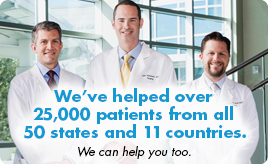
Our team of dedicated, board-certified doctors work with each patient to find a solution best suited to their individual needs. Along with Dr. Nicholson, Dr. Brian Long and Dr. Thomas Roshek, our extended team includes a dedicated staff of physician assistants, experienced clinicians and support staff, and partners with registered dietitians and clinical psychologists to provide the optimum continuum of care.
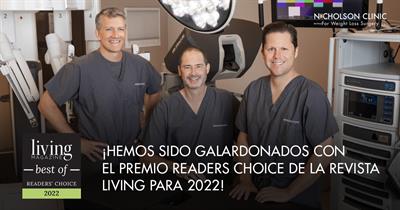
¡Nos complace anunciar que Nicholson Clinic ha sido votada como “Mejor cirujano bariátrico” en la revista Living! Por primera vez, los tres cirujanos de la Clínica Nicholson obtuvieron el reconocimiento en cuatro áreas diferentes en todo el DFW Metroplex: ¡Frisco/Plano, McKinney/Allen, Prosper/Celina y Richardson/Murphy!
Este es el octavo año que el Dr. Nick Nicholson y nuestra clínica han recibido la distinción de “Lo mejor de”, y nunca pasa de moda. ¡Gracias a todos los que votaron por nosotros!
Todos los días en Nicholson Clinic, nuestro objetivo es brindar la mejor atención a nuestros pacientes. Hacemos eso a través de consultas individuales, nuestro enfoque en la educación, respondiendo todas y cada una de las preguntas que nuestros pacientes puedan tener y brindando espacio para que nuestros pacientes se conecten con otros en el mismo viaje. Los votantes de la Living Magazine eligieron la Clínica Nicholson por este enfoque integral para tratar a los pacientes.
Nuestro equipo de médicos dedicados y certificados por la junta trabaja con cada paciente para encontrar la solución que mejor se adapte a sus necesidades individuales. Junto con el Dr. Nicholson, el Dr. Brian Long y el Dr. Thomas Roshek, nuestro equipo ampliado incluye un personal dedicado de asistentes médicos, médicos experimentados y personal de apoyo, y socios con dietistas registrados y psicólogos clínicos para brindar la atención continua óptima.
Hay muchos tipos de procedimientos de cirugía de pérdida de peso que ofrecen a los pacientes la oportunidad de tener éxito en su viaje de pérdida de peso. La cirugía bariátrica ayuda a limitar la ingesta de alimentos, restringir la absorción de nutrientes o ambos.
Para calificar para la cobertura de seguro para la cirugía de pérdida de peso, el paciente debe tener un índice de masa corporal (IMC) de 40 o más (lo que se traduce en aproximadamente 100 libras de sobrepeso para los hombres y 80 libras de sobrepeso para las mujeres) O un IMC entre 35 y 39.9 con al menos un problema de salud grave relacionado con la obesidad, como una enfermedad cardíaca,diabetes tipo 2, apnea del sueño severa, hipertensión, dolor debilitante en las articulaciones o ácido no controlado.
Para cuando los pacientes buscan una cirugía de pérdida de peso, generalmente han probado otros métodos de pérdida de peso a lo largo de los años sin éxito.
Para prepararse para la cirugía de pérdida de peso, un paciente tiene que dejar de fumar, vigilar su dieta, aumentar el consumo de beber agua y estar mentalmente preparado.
Requisitos de peso que lo califican para la cobertura de seguro para cirugía bariátrica
Si bien la cirugía bariátrica puede ser un procedimiento relativamente costoso, la Clínica Nicholson se compromete a ayudar a cada paciente que necesita cirugía para perder peso. Ofrecemos uno de los precios de auto pagó más bajos del país y tenemos opciones de financiamiento disponibles. La clínica Nicholson acepta la mayoría de los seguros principales.
La encuesta sobre los criterios de cobertura de seguros para la cirugía bariátrica muestra que el 95% de las empresas tienen pólizas claramente definidas que cubren la cirugía laparoscópica y de bypass Roux-en-Y.
La mayoría de las compañías de seguros cubren la cirugía bariátrica siempre y cuando el paciente tenga un IMC de 35-39.9 con comorbilidades o un IMC de 40 y cumpla con los requisitos preoperatorios.
Para trabajar con su proveedor de seguros para pagar su cirugía bariátrica, generalmente requieren que los pacientes:
- Tener 18 años o más
- Tiene un IMC de 35 con un problema de salud relacionado con la diabetes o grave relacionado con la obesidad, o un IMC de 40 o más
- Producir evidencia de sus esfuerzos pasados para perder peso
- Pasa tu evaluación psicológica
- No tiene antecedentes de abuso de drogas y sustancias
- Dejar de fumar y beber alcohol
La cobertura para su cirugía de pérdida de peso depende de su plan de seguro específico, sin embargo, el especialista en seguros de la Clínica Nicholson trabajará con usted y su proveedor de seguros para ayudarlo a minimizar sus gastos de bolsillo y maximizar la cobertura para su procedimiento.
There are many types of weight loss surgery procedures that offer patients the opportunity to succeed in their weight loss journey. Bariatric surgery helps to limit food intake, restrict nutrient absorption, or both.
To qualify for insurance coverage for weight loss surgery, the patient must have a body mass index (BMI) of 40 or more (which translates to about 100 pounds overweight for men and 80 pounds overweight for women) OR a BMI between 35 and 39.9 with at least one serious obesity-related health issue such as heart disease, type 2 diabetes, severe sleep apnea, hypertension, debilitating joint pain or uncontrolled acid.
By the time patients seek weight loss surgery, they typically have tried other weight loss methods over the years without success.
To prepare for weight loss surgery, a patient has to quit smoking, watch their diet, increase water intake, and be mentally prepared.
Weight Requirements that Qualify You for Insurance Coverage for Bariatric Surgery
While bariatric surgery can be a relatively expensive procedure, the Nicholson Clinic is committed to helping every patient who needs weight loss surgery. We offer one of the lowest self-pay prices in the country and have financing options available. Nicholson Clinic accepts most major insurance.
The survey on insurance coverage criteria for bariatric surgery shows that 95% of companies have clearly defined policies covering laparoscopic and Roux-en-Y bypass surgery.
Most insurance companies cover bariatric surgery as long as the patient has a BMI of 35-39.9 with comorbidities or a BMI of 40 and fulfill the pre-op requirements.
To work with your insurance provider to pay for your bariatric surgery, they generally require patients to:
- Be 18 years and above
- Have a BMI of 35 with a diabetes-related or serious obesity-related health issue, or BMI of 40 and above
- Produce evidence of your past efforts to lose weight
- Pass your psychological evaluation
- Have no history of drug and substance abuse
- Quit smoking and drinking alcohol
Coverage for your weight loss surgery is dependent on your specific insurance plan, however Nicholson Clinic’s insurance specialist will work with you and your insurance provider to help you minimize your out-of-pocket expense and maximize coverage for your procedure.
Arcelys had gastric sleeve surgery with Dr. Roshek in June 2021. Since surgery, she has shed more than 90 pounds, and is even training for a triathlon with her husband! This is her story.

Life Before Surgery
“Before surgery, I always had very little energy, was always sick and seeing my doctor. I had high cholesterol and triglycerides and was pre-diabetic and infertile. Emotionally, I was always in a bad mood and living with constant bouts of depression.
“After going to the nutritionist for more than a year and exercising without results, I began investigating what I could do to not feel so sad and improve my health. I watched a YouTube video of the gastric sleeve surgery and started doing research and following people who have had the surgery on social media to learn more about their experiences.”
The Nicholson Clinic Experience
“I’m very happy I chose Dr. Roshek after visiting three doctors. After meeting Dr. Roshek, my husband and I agreed he was the doctor we were looking for. He was very clear and precise in his answers to all the questions I asked him about the pros and the cons of surgery. Because I had done a lot of research, I had a document on my phone full of questions and he answered all of them, leaving me satisfied. He explained everything to me in detail. The Nicholson Clinic staff is incredible and always very attentive, especially Amber. She was a great help to me before, during and after my surgery.”
Life After Surgery
“I’m a new person both inside and out! Sometimes I find it hard to believe that this is the new me but little by little I am realizing it. I’m super happy for the first time in my life. I feel good without being in the ER and feeling depressed.
“My husband’s dream was for us to ride bikes together. Now, we are training for a triathlon together! My starting weight was 228 pounds and my BMI was 42 (Obesity III). Now I weigh 134 pounds and my BMI is 23. I have lost 94 pounds, but it’s not just the excess weight on the outside that has changed. I feel like I took it off from the inside, my bad mood is gone. I feel wonderful!”
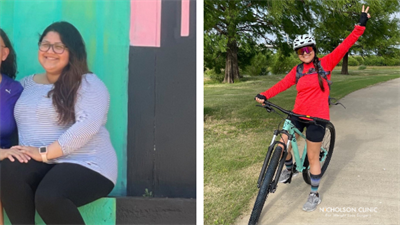
Arcelys se sometió a una cirugía de manga gástrica con el Dr. Roshek en Junio de 2021. Desde la cirugía, ha perdido más de 90 libras, incluso está entrenando para un triatlón con su esposo! Esta es su historia.
La vida antes de la cirugía
“Antes de la cirugía, siempre tenía muy poca energía, siempre estaba enferma y veía a mi médico. Tenía colesterol y triglicéridos altos y era prediabética e infértil. Emocionalmente, siempre estaba de mal humor y viviendo con constantes episodios de depresión.
“Después de ir al nutricionista durante más de un año y hacer ejercicio sin resultados, comencé a investigar qué podía hacer para no sentirme tan triste y mejorar mi salud. Vi un video de YouTube de la cirugía de manga gástrica y comencé a investigar y seguir a las personas que se han sometido a la cirugía en las redes sociales para obtener más información sobre sus experiencias”.
La experiencia de la Clínica Nicholson
“Estoy muy feliz de haber elegido al Dr. Roshek después de visitar a tres médicos. Después de conocer al Dr. Roshek, mi esposo y yo estuvimos de acuerdo en que él era el médico que estábamos buscando. Fue muy claro y preciso en sus respuestas a todas las preguntas que le hice sobre los pros y los contras de la cirugía. Debido a que había investigado mucho, tenía un documento en mi teléfono lleno de preguntas y él respondió a todas ellas, dejándome satisfecha. Me explicó todo en detalle. El personal de la Clínica Nicholson es increíble y siempre muy atento, especialmente Amber. Ella fue una gran ayuda para mí antes, durante y después de mi cirugía”.
La vida después de la cirugía
“¡Soy una persona nueva tanto por dentro como por fuera! A veces me cuesta creer que este sea el nueva yo pero poco a poco me voy dando cuenta. Estoy súper feliz por primera vez en mi vida. Me siento bien sin estar en la sala de emergencias y sentirme deprimida.
“El sueño de mi esposo era que anduviéramos en bicicleta juntos. ¡Ahora, estamos entrenando para un triatlón juntos! Mi peso inicial fue de 228 libras y mi IMC fue de 42 (Obesidad III). Ahora peso 134 libras y mi IMC es de 23. He perdido 94 libras, pero no es solo el exceso de peso en el exterior lo que ha cambiado. Siento que me lo quité de adentro, mi mal humor se ha ido. ¡Me siento maravilloso!”
More than 500,000 gallbladder removal procedures are performed each year, making it one of the most commonly performed surgical procedures in the United States today. Surgery to remove the gallbladder (cholecystectomy) is the most common treatment for severe gallbladder disorders.
Morbid obesity is a risk factor for gallbladder disease. Obese patients who require gallbladder and weight loss surgery can minimize complications if they get a gallbladder removal procedure first.
Patients with obesity and symptomatic gallstones should undergo cholecystectomy first before having a gastric bypass.
In a Swedish study, researchers looked into data about patients who underwent gallbladder removal surgery and those who had Roux-en-Y gastric bypass. Some of the patients had one of these procedures, and others had both surgeries either separately or simultaneously.
Among those who underwent both operations, people who opted for weight loss surgery first were more likely to experience complications than the ones who underwent gallbladder removal first.
If a patient’s gallstones don’t show any symptoms, they shouldn’t undergo surgery. This can cause complications for patients who wouldn’t be troubled at all by their gallstones.
The results of the study suggest that patients should always discuss the order of the two surgical procedures with their doctors beforehand. This will help them weigh the benefits and risks of both surgeries.
Gallbladder problems occur due to the presence of small hard masses of bile salts and cholesterol (gallstones) in the bile duct or gallbladder. Gallstones often block bile flow from the gallbladder, causing swelling, pain in the abdomen, fever, indigestion, and vomiting. When they block the bile duct, a patient can have jaundice.
While you can temporarily manage gallstones using drugs or diet, the symptoms may continue until the gallbladder is surgically removed.
Your doctor will assess your symptoms and make a recommendation on the best course of treatment for you.